
How Does BMS Manage DC Fast Charging?

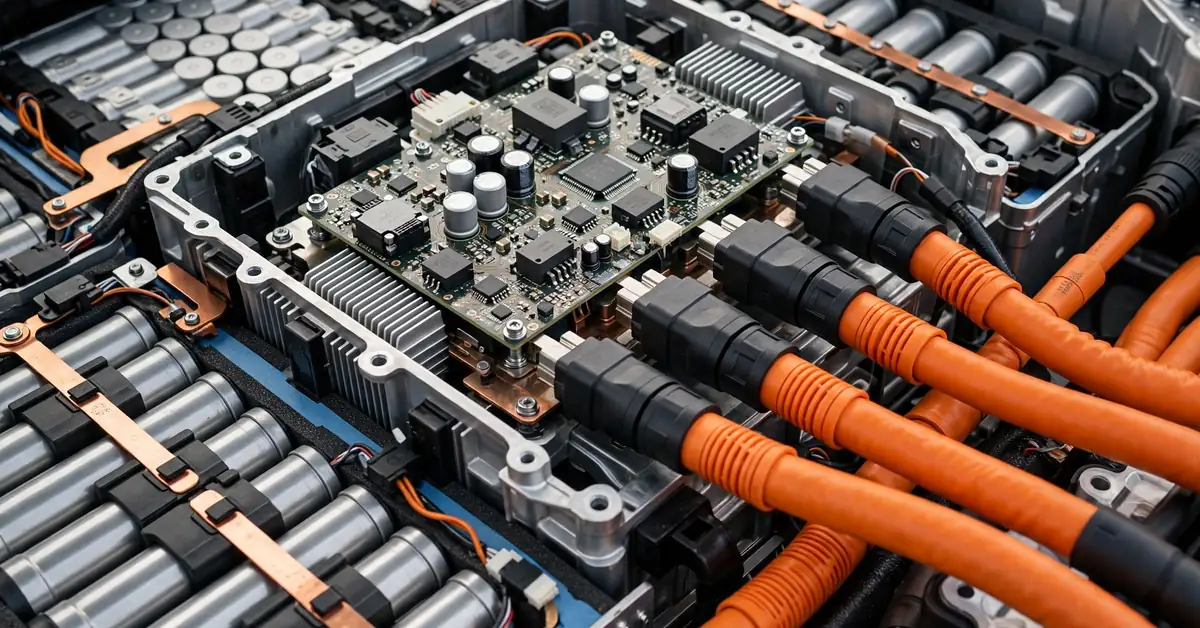
A BMS manages DC fast charging by continuously negotiating current and voltage limits with the charger based on real-time temperature and state of charge, then adjusting those limits throughout the session as conditions change, since DC fast charging pushes far more current through the pack than routine home charging ever does. This constant, active negotiation is what makes fast charging both quick and safe.
Why DC Fast Charging Requires More Active Management
Unlike AC charging, where the vehicle’s onboard charger converts and regulates power gradually, DC fast charging delivers high-voltage DC power directly to the battery, bypassing that onboard conversion step entirely. This means much higher current flows directly into the pack, generating significantly more heat and stress than typical home charging, requiring the BMS to manage the process far more actively.
The Session From Start to Finish
Pre-Charge Communication
Before meaningful current flows, the BMS and charger establish a digital communication link, with the BMS reporting the maximum voltage and current the pack can safely accept given its current temperature and state of charge.
The Bulk Charging Phase
Once charging begins, current typically ramps up to near the negotiated maximum, delivering the fastest possible charging speed during the lower-to-mid state of charge range, where the battery can accept high current most safely.
The Tapering Phase
As the pack approaches a higher state of charge, the BMS progressively reduces the maximum acceptable current, following a constant-current, constant-voltage profile, which is why charging visibly slows in the final portion of a fast-charging session.
Continuous Real-Time Adjustment
Throughout the entire session, the BMS keeps monitoring pack temperature and individual cell voltages, sending updated limits to the charger whenever conditions require it, whether that’s due to rising heat, an approaching voltage limit, or any detected irregularity.
Why Temperature Drives So Much of the Decision-Making
Fast charging generates substantial heat from the sheer current flow involved. If the BMS’s thermal management system can’t remove heat quickly enough, the BMS will reduce the negotiated current limit directly, prioritizing pack safety and longevity over maximum charging speed.
Why Preconditioning Matters So Much for Fast Charging
A battery that arrives at a fast charger already warmed to its ideal temperature range can accept much higher current from the very start of the session, compared to a cold pack that needs to warm up before reaching its full charging potential, which is exactly why preconditioning has such a meaningful impact on total charging time.
Managing Cell-Level Safety During High-Current Charging
Even during aggressive fast charging, the BMS continues monitoring every individual cell’s voltage, ready to reduce current or halt the session entirely if any single cell approaches an unsafe threshold, regardless of how the rest of the pack is performing.
| Charging Phase | BMS Behavior |
|---|---|
| Pre-charge negotiation | Reports safe current/voltage limits based on temperature and SOC |
| Bulk charging | Allows near-maximum negotiated current |
| Tapering phase | Progressively reduces current as SOC rises |
| Continuous monitoring | Adjusts limits in real time based on temperature/voltage |
Conclusion
A BMS manages DC fast charging through continuous, real-time negotiation with the charger, setting initial limits based on temperature and state of charge, then adjusting them throughout the session as the pack heats up and approaches full charge. This active, ongoing management is exactly what allows fast charging to deliver genuinely rapid charging speeds without pushing the battery outside its safe operating limits.
FAQs
Why does DC fast charging slow down significantly above 80%?
The BMS tapers charge current as cells approach full charge, following a constant-current, constant-voltage profile that protects the cells near their upper voltage limit.
Can fast charging every time damage my EV’s battery?
The BMS actively manages temperature and current to keep fast charging within safe limits, though very frequent fast charging can contribute somewhat faster capacity fade over the long term compared to predominantly slower charging.
Does preconditioning always speed up DC fast charging?
In cold conditions specifically, yes, significantly; in already-warm conditions, the benefit is smaller since the pack doesn’t need as much thermal adjustment.
