
What Is ISO 15118 and How Does It Relate to BMS?

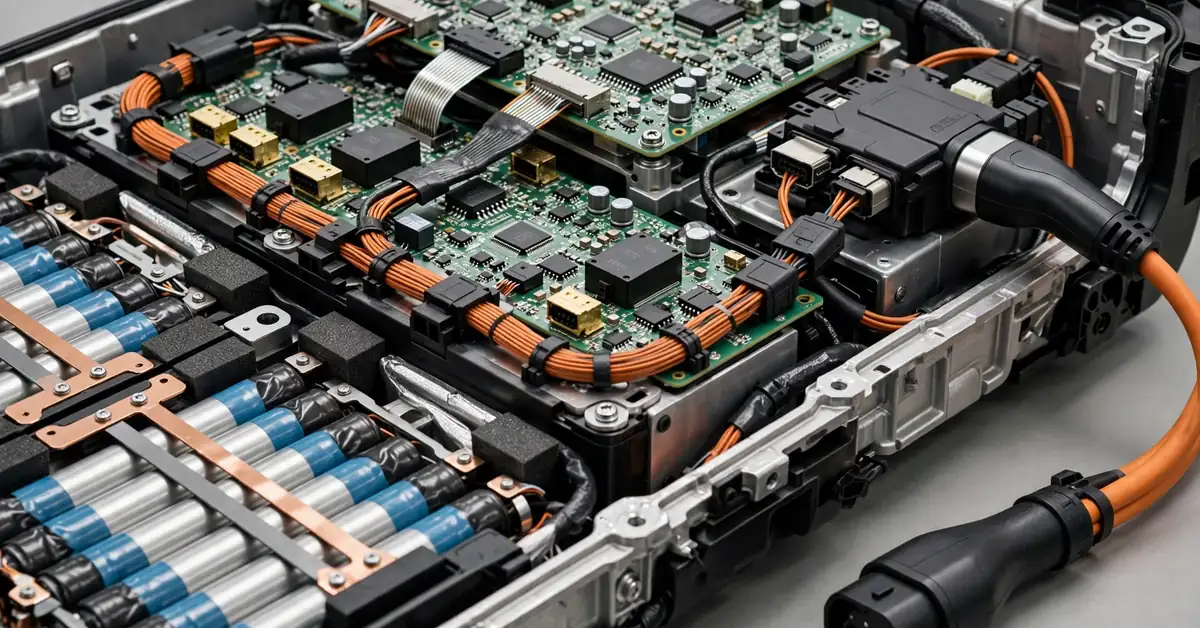
ISO 15118 is an international standard governing digital communication between EVs and charging stations, enabling features like Plug & Charge authentication, and it relates to the BMS because the vehicle-side data exchanged under this standard, battery limits, state of charge, and charging requests, originates directly from the BMS. It’s the protocol layer that lets modern DC fast charging be smarter and more automated than older, simpler charging communication.
Why ISO 15118 Was Developed
Earlier charging communication standards, including DIN 70121, established basic digital communication between vehicle and charger but lacked features like built-in security. ISO 15118 was developed to build on that foundation with a more complete, secure, and feature-rich communication framework suited to modern EV charging needs.
What ISO 15118 Actually Enables
Plug & Charge Authentication
Perhaps its most visible consumer-facing feature, Plug & Charge allows a vehicle to automatically authenticate and authorize a charging session the moment it’s plugged in, without the driver needing a separate app, card, or manual authorization step.
Detailed Power Negotiation
Beyond basic current and voltage limits, ISO 15118 supports more granular communication of charging parameters and requirements, allowing for more precisely tailored charging sessions than older, simpler protocols could support.
Advanced Energy Services
The standard also lays groundwork for more sophisticated energy interactions, including bidirectional charging capabilities relevant to vehicle-to-grid applications, extending communication beyond simply receiving power to potentially managing energy flow in both directions.
Built-In Security
Unlike earlier standards, ISO 15118 incorporates transport layer security, protecting the communication exchange between vehicle and charger, an increasingly important consideration as charging infrastructure becomes more connected and software-driven.
How the BMS Fits Into This Communication
The BMS is the ultimate source of the vehicle-side data that ISO 15118 communication actually carries. When a vehicle requests a specific maximum current or voltage, or reports its current state of charge during a Plug & Charge session, that information comes directly from the BMS’s own real-time calculations. ISO 15118 provides the communication framework and security layer; the BMS provides the actual battery intelligence being communicated.
Where ISO 15118 Is Used Today
The standard is primarily associated with modern CCS (Combined Charging System) DC fast charging infrastructure, where its more sophisticated communication capabilities offer clear advantages over the simpler analog signaling still used for most AC Level 1 and Level 2 charging.
Why This Matters for the Future of Charging
As vehicle-to-grid and other bidirectional energy applications become more common, having a communication standard already designed to support more complex, secure data exchange between vehicle and charger becomes increasingly valuable, positioning ISO 15118 as infrastructure for charging capabilities that go well beyond simply filling a battery.
| ISO 15118 Feature | Practical Benefit |
|---|---|
| Plug & Charge | Automatic authentication, no separate app/card needed |
| Detailed power negotiation | More precisely tailored charging sessions |
| Bidirectional communication support | Groundwork for vehicle-to-grid applications |
| Built-in security | Protects vehicle-charger data exchange |
Conclusion
ISO 15118 is the communication standard that enables features like Plug & Charge and more sophisticated power negotiation in modern DC fast charging, and it relates directly to the BMS because the actual battery data flowing through that communication, limits, state of charge, requests, comes straight from the BMS’s own calculations. As charging infrastructure grows more connected and bidirectional, this standard is becoming an increasingly important piece of how EVs and chargers talk to each other.
FAQs
Does every EV support ISO 15118 and Plug & Charge?
No, support depends on the specific vehicle and charging hardware; not every EV or charging station has implemented this standard.
Is ISO 15118 used for home Level 2 AC charging?
It’s primarily associated with DC fast charging infrastructure; most Level 1/2 AC charging still relies on simpler Control Pilot signaling.
Does ISO 15118 make charging faster?
Not directly — it doesn’t increase raw charging speed, but it enables more automated and precisely coordinated charging sessions.
