
Mitsubishi Outlander PHEV Battery: Complete Guide

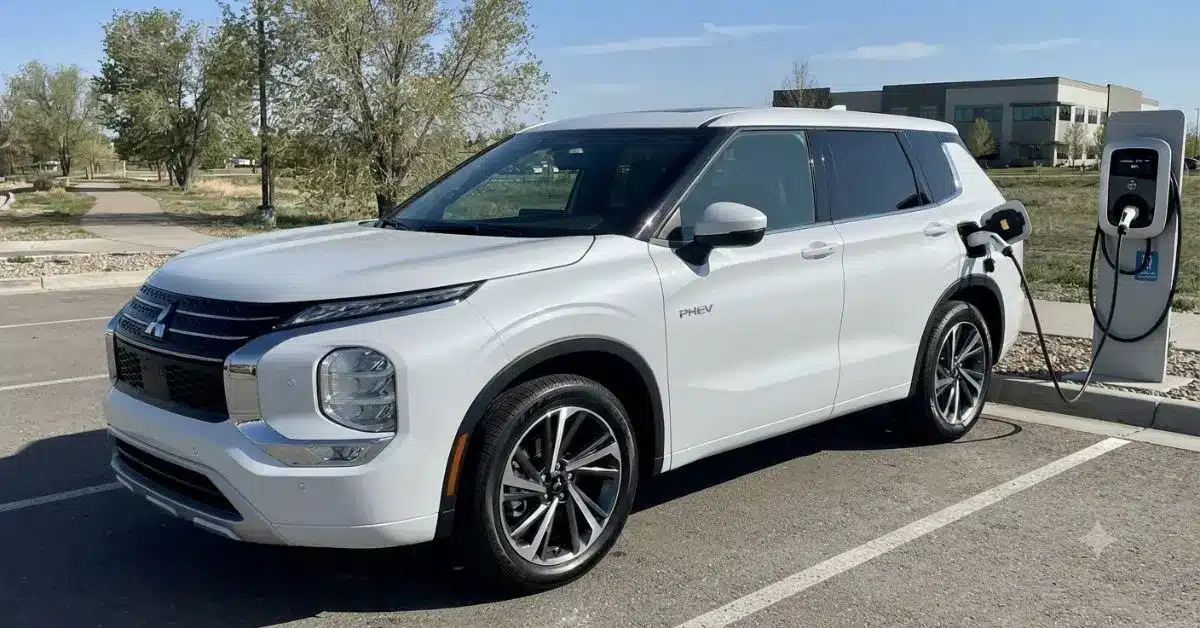
Mitsubishi upgraded the Outlander PHEV battery for 2026. The battery grew from 20 kWh to 22.7 kWh. This change increased the electric-only range from about 38 miles to 53 miles. The car can now travel about 524 miles (844 km) using both electricity and gas.
Engineers also boosted the system power from 252 horsepower to 302 horsepower by improving the electric motors. The Outlander PHEV remains the best plug-in hybrid 7-seater SUV under $50,000 in the U.S. It outperforms competitors like the Hyundai Tucson PHEV.
Mitsubishi Outlander PHEV Battery: Old vs New Specs
| Spec | 2022–2024 (20 kWh) | 2025–2026 (22.7 kWh) |
|---|---|---|
| Battery capacity (gross) | 20 kWh | 22.7 kWh |
| Chemistry | Lithium-ion NMC | Lithium-ion NMC |
| EV range (WLTP) | ~38–42 miles | 53 miles (86 km) |
| EV range (EPA, U.S.) | ~38 miles | ~38 miles (est. pending update) |
| System power | 252 hp | 302 hp |
| 0–62 mph | ~8.8 seconds | 7.9 seconds |
| Combined range (PHEV) | ~480 miles | ~524 miles (844 km) |
| Drivetrain | AWD (S-AWC) | AWD (S-AWC) |
| Starting price (U.S.) | ~$44,000 | ~$44,000 |
How the Outlander PHEV Battery System Works
The Outlander PHEV uses a twin-motor PHEV architecture — one electric motor on each axle. The front motor is powered by the 22.7 kWh battery; the rear motor runs independently of the battery. A 2.4-liter petrol engine can either drive the front wheels directly or act as a generator to charge the battery. This twin-motor setup enables Mitsubishi’s Super All-Wheel Control (S-AWC) — torque vectoring between all four wheels for superior traction in mud, snow, and sand.
The 22.7 kWh battery delivers approximately 16–18 kWh usable in EV mode. The petrol engine operates as a range extender once the battery depletes. Drivers can select between four modes: EV Mode (electric-only), Normal (automatic EV/petrol blend), Save (reserves battery for later), and Charge (engine charges battery while driving). The Save and Charge modes give PHEVs an important real-world advantage over fully electric vehicles on city-heavy routes.
Outlander PHEV Charging Speeds
Method | Power | 22.7 kWh (2025–2026) |
|---|---|---|
Level 1 (120V standard outlet) | ~1.2 kW | ~14 hours full |
Level 2 (240V, 7.2 kW) | 7.2 kW | ~3.5 hours full |
DC Fast Charge (CHAdeMO / CCS) | Up to 50 kW | ~38 min (10–80%) |
The Outlander PHEV retains CHAdeMO DC fast charging in some markets — a legacy Japanese standard increasingly rare in 2026. CCS fast charging is available in other markets. The 50 kW DC rate charges the 22.7 kWh battery quickly, given its relatively modest size. Level 2 at 7.2 kW completes a full charge in approximately 3.5 hours — easily accomplished during a workday charge or afternoon shopping stop.
Real-World EV Range: What Owners Report
- Summer / mild weather urban driving: 50–60 miles EV-only (20–22 kWh/100 km efficiency achievable at low urban speeds)
- Highway at 70 mph: Approximately 30–38 miles EV-only — highway aerodynamic drag reduces range substantially
- Cold weather (5–10°C): Approximately 40–45 miles — heat pump helps, but cold reduces range noticeably
- Cold weather (below -10°C): Approximately 25–35 miles — heat pump less effective; ICE activates more to provide cabin heat
Battery Warranty
Mitsubishi protects the Outlander PHEV battery with a 10-year or 100,000-mile warranty in the U.S. This matches the 10-year term from Hyundai and Genesis. This long warranty gives owners peace of mind about the drive battery.
Real-world reports from 2022 to 2024 models show the battery loses about 1.5% to 2% of its capacity each year. If you live in a cold area, note that the 2023 to 2025 models do not have an active battery heater. This heater keeps the battery warm when temperatures drop below about −15°C.
Outlander PHEV vs Competitors: Seven-Seat PHEV Comparison
| Model | Battery | EV Range (WLTP) | System Power | Seats | Starting Price |
|---|---|---|---|---|---|
| Mitsubishi Outlander PHEV (2026) | 22.7 kWh | 53 miles | 302 hp | 7 | ~$44,000 |
| Kia Sorento PHEV | 13.8 kWh | ~32 miles | 261 hp | 7 | ~$43,000 |
| Toyota RAV4 PHEV | 18.1 kWh | 54 miles | 302 hp | 5 | ~$43,865 |
| Land Rover Defender PHEV | 19.2 kWh | 43 miles | 398 hp | 5–7 | ~$68,000 |
Charging Tips for Outlander PHEV Owners
- Use Save Mode strategically: Enable Save Mode before motorway stretches to reserve EV range for urban driving, where efficiency is highest
- Charge fully before every day trip: The 22.7 kWh pack charges in 3.5 hours on Level 2 — never start the day without a full battery if Level 2 access is available
- Cold climate owners: park in a garage: Below −15°C, the 2023–2025 models lack active battery heating — parking indoors prevents starting issues in extreme cold
- Use EV Mode for urban sections: Toggle to EV Mode when entering city centers for zero-emission driving and highest efficiency
Conclusion
The 2025–2026 Mitsubishi Outlander PHEV upgraded its battery from 20 kWh to 22.7 kWh. This change helps the SUV reach a 53-mile electric range under WLTP testing. Its twin-motor, all-wheel-drive system produces 302 horsepower. Drivers can travel a total of 524 miles, reducing stress on long road trips.
If you are looking at other seven-seat plug-in hybrid SUVs, read our Hyundai Santa Fe PHEV battery guide. The Outlander PHEV remains the best choice for families who need seven seats and all-wheel drive. It lets you complete daily commutes using only electricity at a great price.
