
What Are Common BMS Error Codes in Electric Cars?

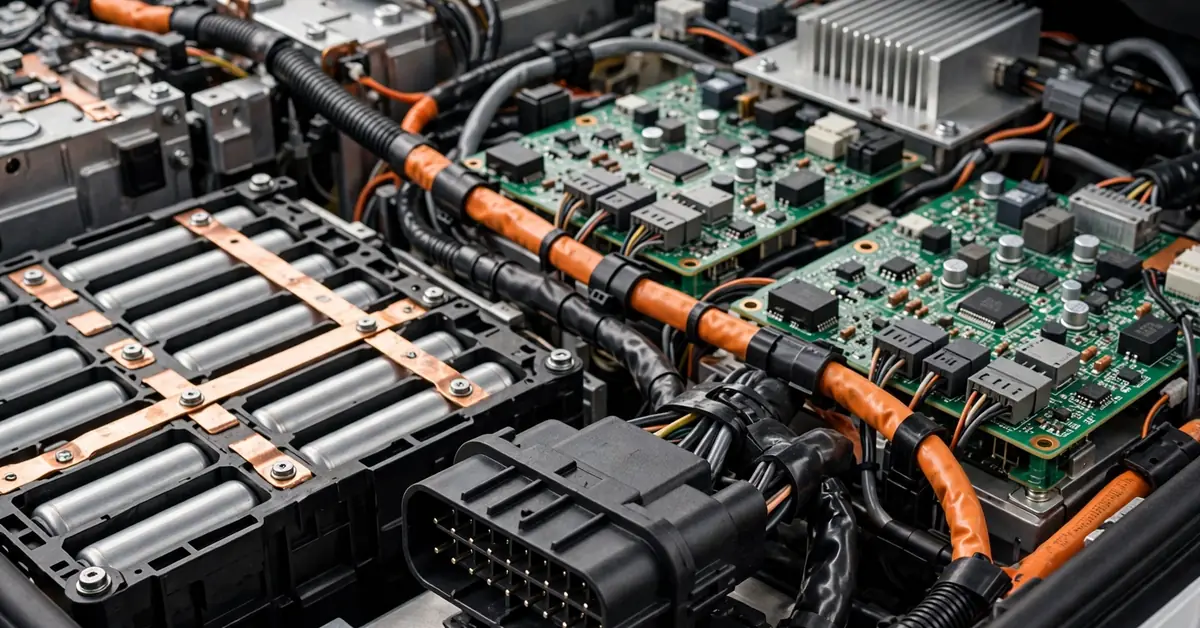
Common BMS error codes in electric cars fall into a handful of categories: cell imbalance, reduced maximum charge level, isolation/ground faults, communication loss, and thermal warnings, most following either standardized OBD-II P0Axx-P0Fxx codes or manufacturer-specific formats like Tesla’s BMS_ prefixed codes. Knowing what category a code falls into helps you gauge urgency even before a technician gets involved.
Why EV Error Codes Differ From Traditional Car Codes
Standard OBD-II was originally built around emissions and engine diagnostics. EVs still use it for shared functions like ABS or airbags, but battery and drivetrain issues rely heavily on additional codes, either extended standardized ranges specifically covering hybrid and electric vehicle systems, or entirely manufacturer-specific formats.
Cell Imbalance Codes
These indicate one or more cells (or cell groups) have drifted to a different capacity or voltage than the rest of the pack. The BMS limits usable capacity to protect the weaker cells, which is exactly why these codes are often accompanied by reduced range or an inability to reach a full charge.
Reduced Maximum Charge Level Codes
These suggest an internal battery issue is limiting how high the pack can charge, sometimes capping it well below 100%, or even well below 50% in more serious cases. This category often points to a genuine hardware problem within the high-voltage battery rather than a simple software glitch.
Isolation and Ground Fault Codes
These flag reduced electrical isolation between the high-voltage system and the vehicle chassis, a genuine safety-relevant category that generally warrants prompt professional attention rather than a wait-and-see approach.
Communication Loss Codes
Codes indicating lost communication between the BMS and other control modules can result from something as simple as a loose connector or a weak 12V auxiliary battery, sometimes resolving after clearing the code and confirming the issue doesn’t return.
Thermal Warning Codes
These relate to temperature readings outside expected ranges, potentially from an actual thermal event, a sensor issue, or a cooling system problem, and generally deserve immediate attention given their connection to thermal runaway risk.
Standardized vs Manufacturer-Specific Code Formats
Some EV battery codes follow the extended OBD-II P0Axx through P0Fxx range specifically covering hybrid and electric vehicle systems, readable with many modern consumer-grade scanners. Others, like Tesla’s BMS_ prefixed codes (with “f” indicating fault and “w” indicating warning), are manufacturer-specific and may require brand-specific diagnostic tools or documentation to fully interpret.
How to Approach an Error Code as an Owner
- Note the exact code and any accompanying dashboard message or symptom
- Check whether the vehicle’s performance feels noticeably degraded before continuing to drive
- Research the specific code category to gauge urgency, isolation and thermal codes generally warrant faster action than communication glitches
- Bring documented codes to a service visit rather than just describing symptoms, since this can support warranty claims with concrete evidence
| Code Category | Typical Urgency |
|---|---|
| Cell imbalance | Moderate — schedule service, not necessarily urgent |
| Reduced max charge level | Moderate to high — often indicates hardware issue |
| Isolation/ground fault | High — safety-relevant, address promptly |
| Communication loss | Low to moderate — often resolves on its own |
| Thermal warning | High — connected to thermal runaway risk |
Conclusion
Common BMS error codes in electric cars generally fall into cell imbalance, reduced charge capacity, isolation/ground fault, communication loss, and thermal warning categories, following either standardized extended OBD-II codes or manufacturer-specific formats. Understanding which category a code falls into helps set realistic expectations for urgency and next steps, even before a technician provides a full diagnosis.
FAQs
Can I read EV-specific BMS error codes with a basic OBD-II scanner?
Many standardized hybrid/EV codes are readable with consumer-grade scanners, though some manufacturer-specific codes require brand-specific tools.
Should I keep driving if a BMS warning light appears?
It depends on the code category — isolation faults and thermal warnings warrant stopping and seeking service promptly, while some communication glitches may not require immediate action.
Does a BMS error code always mean the battery needs replacement?
No, codes range widely in severity, from minor communication hiccups to genuine hardware faults, so professional diagnosis is needed to determine the actual required repair.
