
What Happens When BMS Triggers a Battery Shutdown?

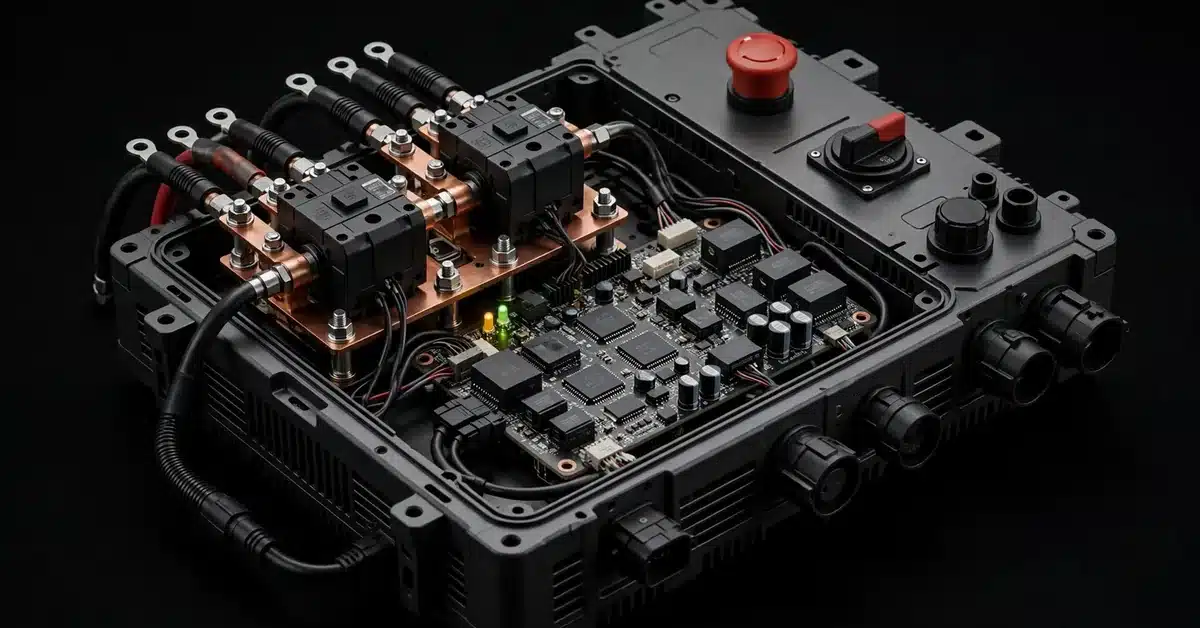
When a BMS triggers a battery shutdown, it opens the main contactors, physically disconnecting the battery pack from the rest of the vehicle’s high-voltage system within milliseconds, cutting power to the motor while typically preserving low-voltage systems needed for basic vehicle function. It’s a deliberate fail-safe response, not a random malfunction.
Why the BMS Shuts Down the Battery in the First Place
A shutdown is the BMS’s last line of defense, reserved for conditions it judges too risky to continue operating through. Rather than letting a serious fault, a confirmed short circuit, a critical overtemperature condition, or a severe voltage anomaly, continue unmanaged, disconnecting the battery entirely removes the energy source feeding the problem.
What Physically Happens During Shutdown
Contactors Open
The main high-voltage contactors, which normally connect the battery pack to the rest of the vehicle’s electrical system, open within milliseconds of the shutdown command, physically breaking the circuit.
Motor Power Is Cut
Without a connection to the battery, the motor immediately loses its power source, meaning the vehicle can no longer be driven under its own power until the fault is resolved and the system resets.
Low-Voltage Systems Often Remain Active
Many EVs maintain a separate low-voltage system, powered by a small 12V battery, specifically to keep essential functions like hazard lights, door locks, and basic dashboard displays operational even after a high-voltage shutdown.
What Triggers a Full Shutdown vs a Lesser Response
Not every fault triggers a full shutdown. Minor issues typically prompt a warning light or reduced power (limp mode) instead. A full shutdown is generally reserved for conditions the BMS judges could lead to immediate danger if power continued flowing, a confirmed short circuit, a critical thermal event, or a severe voltage anomaly.
Can the Vehicle Restart After a BMS Shutdown?
It depends entirely on the underlying cause. A transient fault, sometimes caused by a sensor glitch or a momentary condition, may allow the system to reset and restart normally. A genuine hardware fault or persistent safety condition will typically prevent restart until a technician diagnoses and resolves the underlying issue.
What the Driver Actually Experiences
A sudden loss of drive power, often accompanied by warning lights and messages on the dashboard, is the most immediate and noticeable symptom. Depending on the vehicle and the specific fault, the driver may be able to safely coast to a stop, or in some cases, the vehicle may already be stationary when the shutdown occurs.
Why This Fail-Safe Design Is Considered Correct, Even Though It’s Disruptive
A shutdown stranding a driver is genuinely inconvenient, but the alternative, continuing to operate a battery pack under conditions the BMS has flagged as potentially dangerous, carries far greater risk. This tradeoff, prioritizing safety over convenience in genuinely serious fault conditions, is a deliberate and well-established design philosophy across the industry.
| Fault Severity | Typical BMS Response |
|---|---|
| Minor | Warning light, no power restriction |
| Moderate | Reduced power (limp mode) |
| Severe | Full contactor shutdown |
Conclusion
When a BMS triggers a battery shutdown, it opens the main contactors to physically disconnect the pack from the vehicle’s high-voltage system, cutting motor power while often preserving essential low-voltage functions. This fail-safe response is reserved for the most serious fault conditions, and while it’s disruptive for the driver, it exists specifically to prevent a genuinely dangerous situation from continuing to develop.
FAQs
Can I restart my EV myself after a BMS shutdown?
Sometimes, if the fault was transient, but persistent faults typically require professional diagnosis before the system will allow a restart.
Will my EV’s lights and locks still work after a shutdown?
Often yes, since many low-voltage functions run on a separate 12V system that isn’t affected by a high-voltage shutdown.
Is a BMS shutdown always caused by a dangerous condition?
It’s reserved for conditions the BMS judges serious enough to warrant it, though the underlying cause can range from a genuine hazard to a sensor or communication fault triggering an overly cautious response.
