
What Is Battery Preconditioning and How Does BMS Control It?

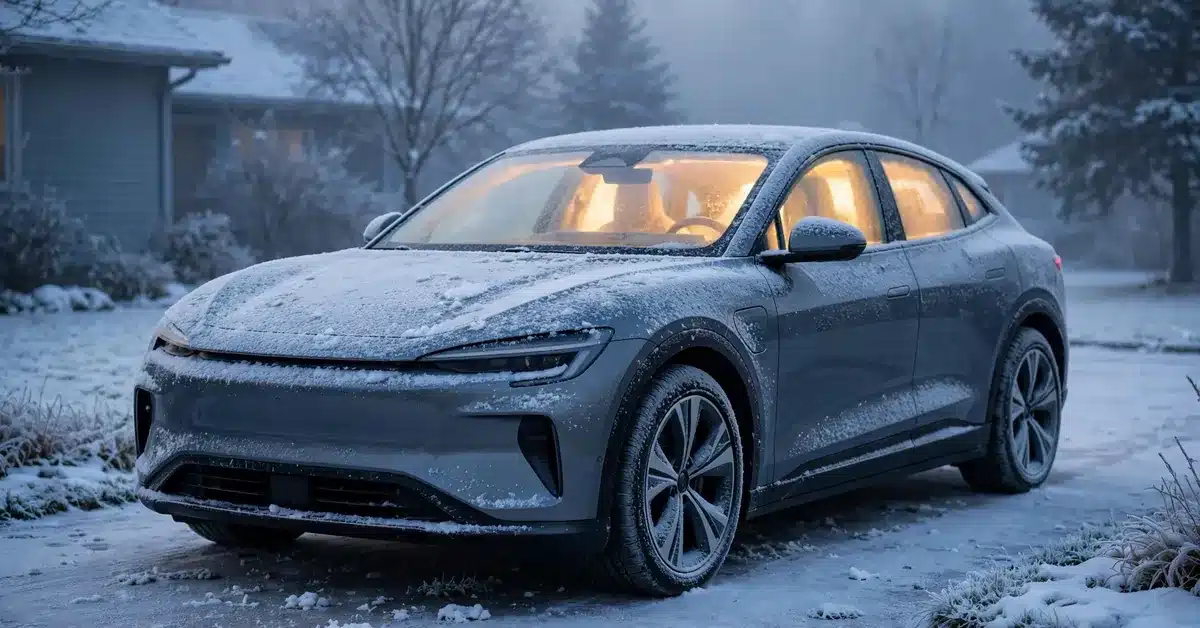
Battery preconditioning is the process of warming or cooling an EV’s battery pack to its ideal temperature before charging or driving, and the BMS controls it by deciding when to activate heating or cooling hardware based on navigation data, scheduled departure times, or ambient temperature. It’s the difference between arriving at a fast charger with a cold battery that limits power, or a battery already primed to accept the full charging rate.
Why Preconditioning Exists
Cold lithium-ion cells can’t safely accept high charging currents without risking lithium plating, a condition where metallic lithium deposits on the anode instead of properly intercalating. To protect against this, the BMS limits charge current on a cold pack, sometimes dramatically. Preconditioning gets ahead of that limit by warming the battery in advance, so the limit never has to kick in.
How the BMS Decides When to Trigger Preconditioning
Navigation-Based Triggers
The most common trigger is setting a DC fast charger as a destination in the vehicle’s built-in navigation. The car estimates arrival time and works backward to start warming the pack early enough to be ready on arrival, typically starting 15 to 45 minutes before reaching the charger depending on how cold conditions are.
Scheduled Departure Triggers
Many EVs let drivers set a planned departure time. The BMS calculates backward from that time to bring the battery, and often the cabin, into an efficient range before the driver actually leaves.
Ambient Temperature Triggers
Some systems automatically begin preconditioning once outside temperature drops below a set threshold, often near freezing, regardless of whether a charging stop or scheduled departure has been set.
Manual Activation
Most EVs also offer a manual preconditioning toggle in the touchscreen or companion app, useful for shorter trips where automatic navigation-based triggers might not have enough lead time.
What the BMS Actually Controls During Preconditioning
Once triggered, the BMS commands the vehicle’s thermal hardware, PTC heaters, a heat pump, or in some designs, waste heat routed from the motor, to bring the pack toward a target temperature, commonly in the range of roughly 15°C to 35°C (60°F to 95°F) depending on the specific charging or driving scenario ahead. Valves and pumps redirect coolant flow accordingly, all coordinated by BMS software rather than a simple on-off switch.
Why Preconditioning Matters So Much for Fast Charging
The difference is significant in practice: a cold pack plugged directly into a 150 kW charger might initially accept well under 50 kW until it warms, while a properly preconditioned pack can accept close to the charger’s full rated power from the moment it’s plugged in. Skipping preconditioning in cold weather can meaningfully extend a charging stop.
Common Limitations Worth Knowing
Many vehicles only trigger automatic preconditioning when a charger is set through the car’s own built-in navigation, not through phone-mirrored apps like Apple CarPlay or Android Auto, unless the manufacturer specifically supports that integration. Shorter trips may also not give the system enough lead time to fully precondition, making manual activation more useful in those cases.
| Trigger Type | How It Works |
|---|---|
| Navigation to a fast charger | Preconditions en route, timed to arrival |
| Scheduled departure | Works backward from a set leaving time |
| Ambient temperature threshold | Activates automatically below a set outdoor temperature |
| Manual toggle | Driver-initiated, useful for short-notice trips |
Conclusion
Battery preconditioning brings an EV’s pack into its ideal temperature range ahead of charging or driving, and the BMS controls exactly when and how aggressively that happens based on navigation, scheduled departures, or ambient conditions. In cold weather especially, this BMS-managed process is what stands between a frustratingly slow charging stop and one that reaches full speed from the moment the cable connects.
FAQs
Does preconditioning use a lot of energy?
It uses some energy from the pack or grid power if plugged in, but the time and charging-speed benefits generally outweigh this small cost, especially in cold weather.
Why didn’t my EV precondition when I used a third-party navigation app?
Many vehicles only trigger automatic preconditioning through their own built-in navigation system, not phone-mirrored apps, unless specifically supported.
Should I precondition even in warm weather?
Some EVs also precondition by cooling the pack before fast charging in hot conditions, since an overly warm battery can also limit charging speed.
