
What Is IoT Integration in EV Battery Management?

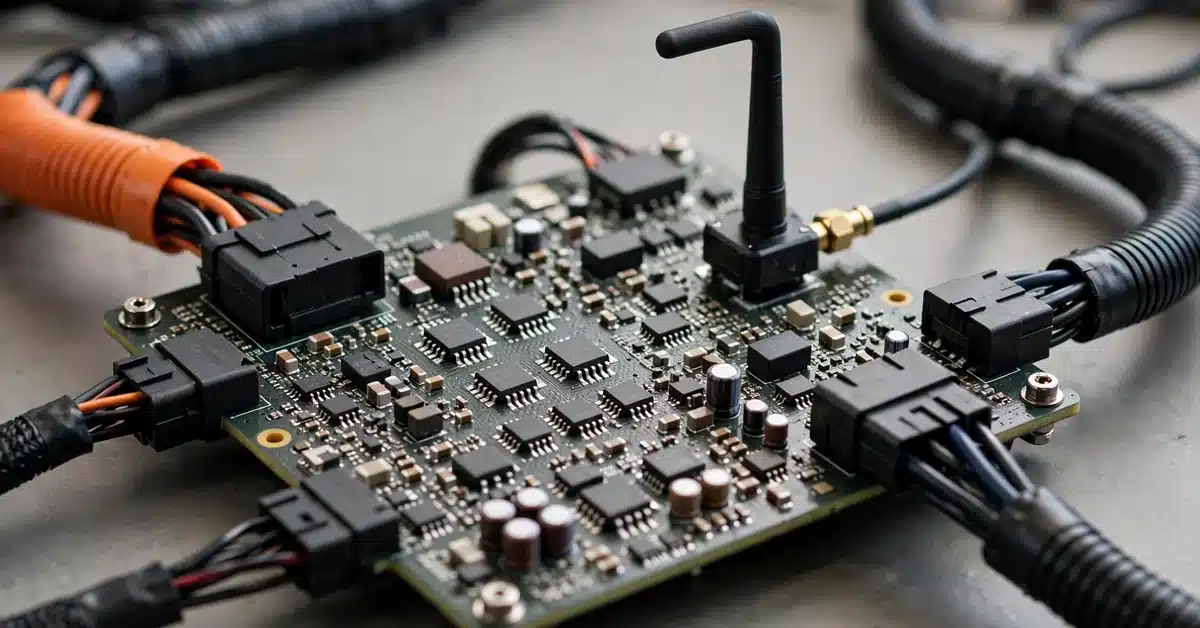
IoT integration in EV battery management connects the BMS not just to the vehicle’s own systems, but to a broader network of devices, charging stations, smart grid infrastructure, mobile apps, and manufacturer platforms, enabling coordinated data exchange across the entire EV ecosystem rather than just within a single car. It’s the difference between a connected vehicle and a connected ecosystem.
Why IoT Integration Is Broader Than Just Vehicle Connectivity
A cloud-connected BMS streaming its own data to manufacturer servers is one piece of the picture. True IoT integration extends further, connecting the vehicle’s battery data with charging infrastructure, home energy systems, and even broader smart grid platforms, creating a genuinely interconnected network rather than a single vehicle-to-cloud pipeline.
How IoT Connects the BMS to Charging Infrastructure
Smart charging stations can exchange data with a vehicle’s BMS beyond the basic power negotiation covered by charging protocols, potentially factoring in grid conditions, dynamic pricing, or charging network load balancing, coordinating charging decisions across multiple connected vehicles rather than treating each charging session in isolation.
How IoT Connects the BMS to Home and Grid Systems
In homes with solar installations or smart energy management systems, IoT integration allows the EV’s battery status to factor into broader household energy decisions, potentially timing charging around solar generation or participating in demand-response programs that benefit from real-time battery state data.
How IoT Enables Fleet-Wide Coordination
For commercial EV fleets, IoT integration allows a central management platform to monitor battery health, charging status, and location data across an entire fleet simultaneously, enabling coordinated charging scheduling and maintenance planning that wouldn’t be possible with isolated, vehicle-only data.
The Role of Standardized Communication in Making This Possible
IoT integration depends on standardized data formats and communication protocols that let genuinely different systems, vehicles from different manufacturers, charging networks, and grid operators, exchange meaningful information with each other, rather than each operating in a completely isolated silo.
Security Considerations With Broader Connectivity
As more systems connect and exchange data, the potential attack surface for cybersecurity concerns grows correspondingly. IoT integration in battery management increasingly incorporates security measures like encrypted communication and authentication specifically to protect this expanded network from unauthorized access or manipulation.
Practical Benefits of This Broader Integration
- Smarter charging decisions informed by grid conditions and pricing, not just the vehicle’s own status
- Better coordination between home energy systems and EV charging
- More efficient fleet management through centralized, real-time visibility
- Potential for V2G and other bidirectional energy services requiring coordinated, multi-system communication
| IoT Connection Point | What It Enables |
|---|---|
| Charging infrastructure | Grid-aware, coordinated charging decisions |
| Home energy systems | Solar-aligned or demand-response charging |
| Fleet management platforms | Centralized visibility across many vehicles |
| Manufacturer cloud services | Broader data analysis and remote diagnostics |
Conclusion
IoT integration in EV battery management extends connectivity beyond the individual vehicle, linking the BMS with charging infrastructure, home energy systems, and fleet management platforms to enable coordinated decisions across the broader EV ecosystem. This wider network of connected data exchange is what makes smarter charging, grid coordination, and fleet-scale management genuinely possible, rather than leaving each vehicle to operate as an isolated, disconnected unit.
FAQs
Is IoT integration the same as having a smart BMS?
They’re related but distinct — a smart BMS focuses on vehicle-level connectivity and features, while IoT integration describes the broader network connecting the vehicle to charging, grid, and other external systems.
Does IoT integration require special hardware in my EV?
Generally yes, connectivity hardware and manufacturer-supported infrastructure need to be built in from the vehicle’s design, not added aftermarket.
Are there security risks with this level of connectivity?
Yes, broader connectivity does increase the potential attack surface, which is why encrypted communication and authentication are increasingly emphasized in IoT-integrated systems.
