
How Does Blockchain Improve EV BMS Data Security?

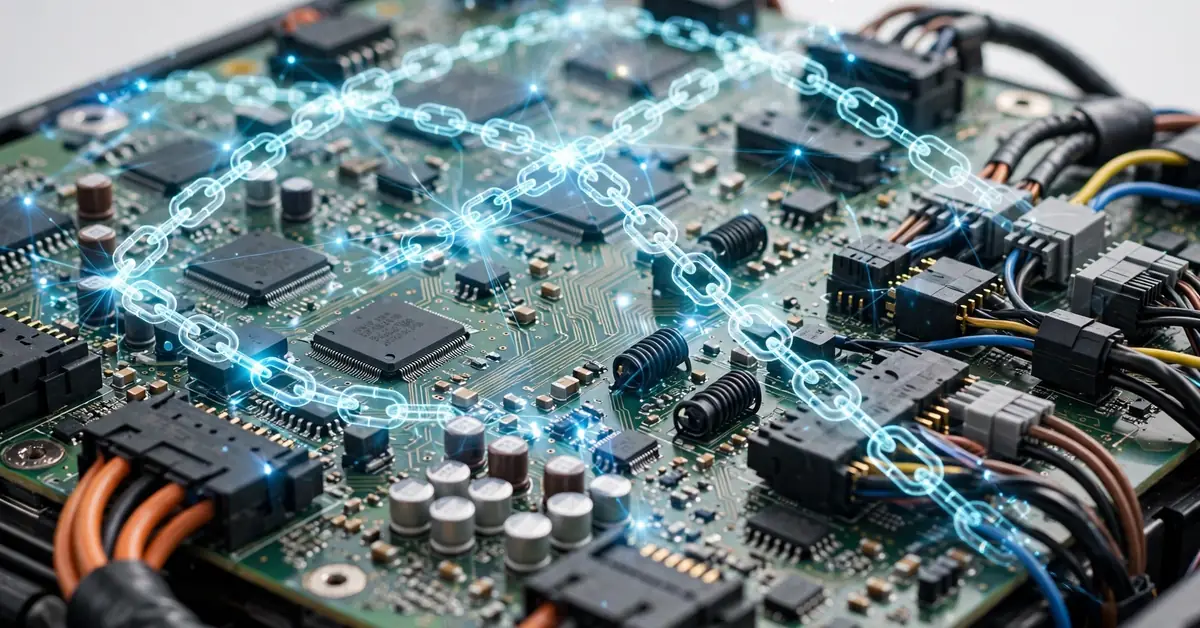
Blockchain improves EV BMS data security by creating a tamper-proof, immutable record of battery data, charging cycles, health metrics, and maintenance history, using cryptographic hashes and consensus algorithms that make it extremely difficult for any single party to alter records after the fact. It’s an emerging application, not yet mainstream across the industry, but one addressing genuine trust and traceability gaps in battery data.
Why Battery Data Trust Is a Genuine Problem
Traditional battery management data is typically stored in systems controlled by a single party, the manufacturer, a fleet operator, or a service provider, creating a genuine question of whether that data could be altered, whether by mistake, negligence, or intentional fraud. This matters enormously for things like warranty claims, resale value assessment, and supply chain traceability.
How Blockchain’s Core Properties Address This
Immutability
Once battery data, a charging cycle, a health reading, a maintenance event, is recorded on a blockchain, cryptographic hashing and consensus mechanisms make altering that historical record extremely difficult, creating a genuinely trustworthy source of information rather than one dependent on trusting a single controlling party.
Transparency Across Stakeholders
Because blockchain records can be shared and verified across multiple parties rather than held privately by one entity, manufacturers, service providers, insurers, and even future buyers can potentially access the same verified battery history rather than relying on claims from a single source.
Reduced Attack Surface for Data Tampering
By decentralizing control over the data record rather than concentrating it in one vulnerable central database, blockchain-based approaches can reduce the practical opportunities for fraud or unauthorized manipulation of battery history.
Specific Use Cases Emerging in This Space
Battery Health Telemetry
Recording verified health data over time supports more trustworthy state-of-health assessments useful for warranty evaluation and resale value determination.
Supply Chain Traceability
Blockchain-based tracking of raw material sourcing, lithium, cobalt, and other critical materials, addresses ethical sourcing transparency concerns that have historically been difficult to verify reliably.
Second-Life Battery Certification
A verified, tamper-proof history of a battery’s usage and degradation supports more confident grading and certification when batteries move into second-life applications, addressing a genuine information gap in that market.
Decentralized Energy Trading
In peer-to-peer energy trading scenarios, blockchain can provide the trusted transaction ledger needed for genuinely decentralized trading between EV owners and grid participants.
Why This Remains an Emerging Rather Than Mainstream Technology
Combining blockchain with IoT sensor data and battery management is still primarily a research and pilot-stage application rather than a widespread industry standard, with practical challenges around computational overhead, standardization, and integration complexity still being worked through across the industry.
| Blockchain Property | Battery Management Benefit |
|---|---|
| Immutability | Tamper-proof historical health/usage records |
| Decentralization | Reduced single-point data manipulation risk |
| Transparency | Shared, verifiable data across stakeholders |
| Smart contracts | Automated, trustworthy transactions (e.g., energy trading) |
Conclusion
Blockchain improves EV BMS data security by creating tamper-proof, verifiable records of battery health, charging history, and maintenance data, addressing genuine trust gaps in warranty claims, resale valuation, and supply chain traceability. While still an emerging application rather than an industry standard, it represents a meaningful potential solution to data integrity challenges that traditional, centrally-controlled battery data systems haven’t fully solved.
FAQs
Is blockchain currently used in production EVs today?
It remains primarily a research and pilot-stage application; most production EVs don’t yet use blockchain for core battery management data.
Does blockchain slow down real-time BMS functions?
Given computational overhead concerns, blockchain applications typically focus on historical record-keeping rather than real-time, safety-critical protection functions.
Could blockchain help with EV battery resale value?
Potentially yes, a verified, tamper-proof usage and health history could give buyers more confidence in a used battery’s actual condition.
