
What Is Predictive Battery Management in EVs?

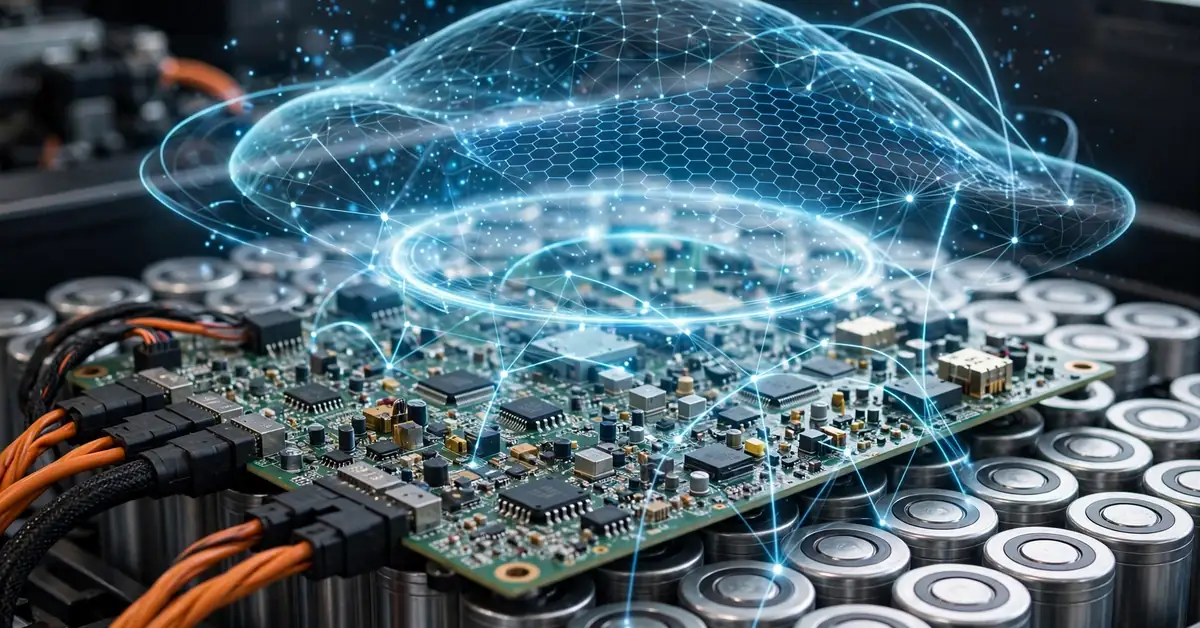
Predictive battery management in EVs uses historical and real-time data to forecast future battery behavior, remaining useful life, and potential failures before they happen, shifting maintenance and protection from a reactive, “respond after something goes wrong” model to a proactive, “act before it becomes a problem” one. It’s the practical outcome that technologies like AI and digital twins are ultimately built to deliver.
The Core Shift: Reactive vs Predictive
Traditional battery protection reacts to conditions as they’re measured in real time, cutting current when voltage exceeds a limit, triggering cooling when temperature rises. Predictive management adds a forward-looking layer, forecasting where the battery is headed based on patterns in its data, and acting earlier, sometimes well before a traditional threshold would even be crossed.
What Predictive Battery Management Actually Forecasts
Remaining Useful Life
By analyzing degradation trends, cycle history, and usage patterns, predictive models estimate how much longer a battery is likely to remain within acceptable performance parameters, going beyond a simple current state-of-health snapshot.
Developing Faults Before They’re Symptomatic
Subtle patterns in voltage, temperature, or resistance data can reveal a developing problem, like an emerging internal short circuit, well before it would show up as a noticeable symptom or trigger a traditional threshold-based warning.
Maintenance Timing
Rather than fixed-interval maintenance schedules, predictive approaches can recommend service timing based on a specific battery’s actual condition and trajectory, potentially catching an issue earlier for one vehicle while avoiding unnecessary early service for another that’s aging more slowly.
The Technologies That Enable Prediction
Predictive battery management typically draws on the same underlying technologies covered elsewhere in modern BMS design: machine learning models trained on historical degradation patterns, digital twins simulating detailed battery behavior, and cloud-based data aggregation across large fleets to identify patterns a single vehicle’s data alone couldn’t reveal.
Why Prediction Requires More Data, Not Just Better Algorithms
A predictive model is only as good as the data it learns from. This is a major reason predictive battery management has advanced alongside, rather than separately from, increased vehicle connectivity and fleet-wide data collection, since spotting genuinely predictive patterns often requires far more historical data than any single vehicle generates on its own.
Real-World Benefits of Predictive Approaches
- Catching a developing cell fault before it triggers a stranding-level failure
- Giving fleet operators advance notice to schedule maintenance around vehicle availability
- Providing more accurate remaining-range and remaining-life estimates to drivers
- Supporting more informed decisions about warranty claims and resale value
Limitations Worth Understanding
Predictions are probabilistic, not certain. A model forecasting a likely developing issue is providing a risk assessment based on patterns, not a guarantee. Predictive systems also depend on adequate data quality and volume, meaning a battery type or usage pattern with limited historical data available may see less reliable predictions than a well-studied, common configuration.
| Traditional Reactive Approach | Predictive Approach |
|---|---|
| Acts after a threshold is crossed | Forecasts trends before thresholds are reached |
| Fixed-interval maintenance | Condition-based, individualized maintenance timing |
| Snapshot-based health assessment | Trend-based remaining life estimation |
Conclusion
Predictive battery management in EVs uses historical and real-time data to forecast remaining useful life and developing faults before they become symptomatic problems, shifting battery care from a reactive to a proactive model. Built on technologies like machine learning and digital twins, and increasingly powered by fleet-wide data aggregation, this approach represents a meaningful step beyond traditional threshold-based battery protection toward genuinely anticipating what a battery needs before it needs it urgently.
FAQs
Is predictive battery management the same as AI-powered BMS?
They’re closely related — AI and machine learning are typically the underlying technologies that make accurate prediction possible, but predictive management refers specifically to the forward-looking outcome these technologies enable.
Can predictive battery management prevent all battery failures?
No, predictions are probabilistic assessments based on patterns, not guarantees, though they can meaningfully reduce the frequency of unexpected failures.
Do all EVs have predictive battery management capability?
No, this capability depends on the vehicle’s connectivity, data collection infrastructure, and manufacturer investment in predictive modeling, varying considerably across the industry.
