
Best EV Battery Warranties Compared: Tesla vs Ford vs Mercedes 2026

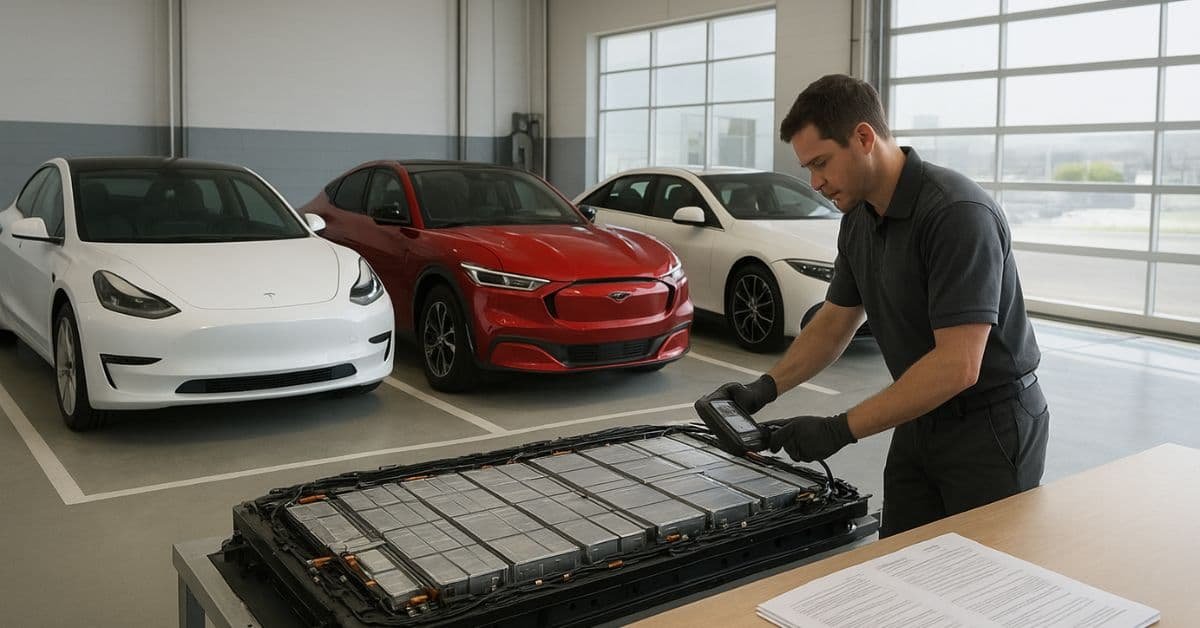
This best EV battery warranty comparison ranks the coverage from Tesla, Ford and Mercedes-Benz — plus Hyundai, Kia, Chevrolet and Nissan — on the three numbers that decide a claim: years, miles and the guaranteed capacity floor. The headline result surprises most buyers: in the US, Mercedes-Benz’s EQ models carry the longest battery warranty of the group at 10 years or 155,000 miles, ahead of Tesla’s 8 years and up to 150,000 miles, while Ford matches the federal minimum at 8 years or 100,000 miles. Every brand here guarantees at least 70% of the battery’s original capacity during the term.
In this guide, you’ll compare the battery warranties from the leading EV manufacturers, understand what each warranty covers, learn what can void your coverage, and discover which brand offers the best protection for long-term ownership.
Quick answer
Mercedes-Benz offers the best EV battery warranty on duration: its EQE and EQS models (sedans and SUVs) are covered for 10 years or 155,000 miles in the US. Tesla is next on mileage — 8 years and up to 150,000 miles on Model S and X — and Ford matches the federal floor at 8 years or 100,000 miles across the Mustang Mach-E, F-150 Lightning and E-Transit. All three guarantee at least 70% capacity retention.
Key figures: Longest term: Mercedes EQ — 10 years / 155,000 miles · Most miles at 8 years: Tesla Model S/X — 150,000 miles · Federal floor (Ford): 8 years / 100,000 miles · Capacity guarantee: 70% (Chevrolet: 75%)
Tesla vs Ford vs Mercedes EV Battery Warranty Comparison
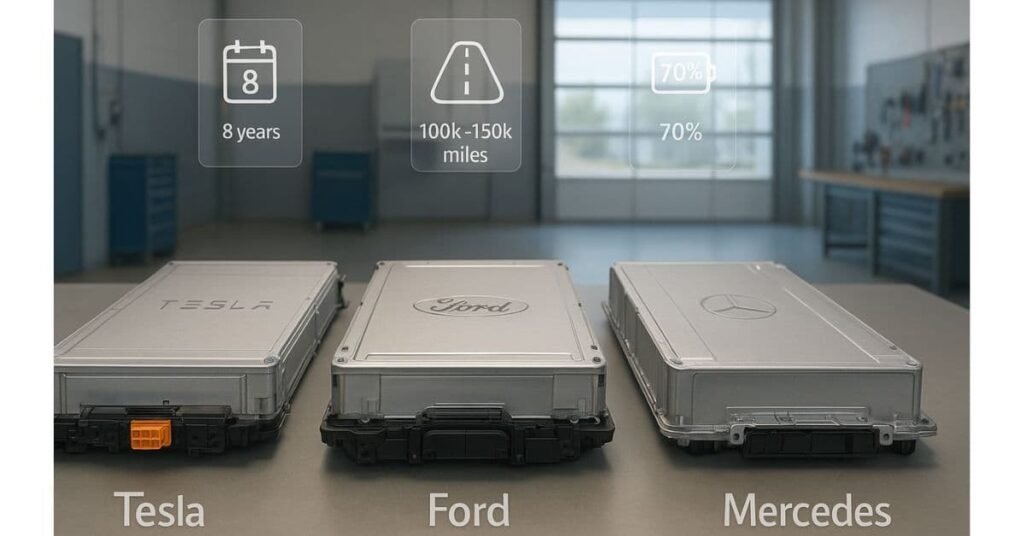
While Tesla, Ford, and Mercedes all protect their high-voltage batteries, each company takes a different approach. The biggest differences are the number of miles covered and how each manufacturer handles battery capacity loss.
Tesla Battery Warranty
Tesla offers one of the strongest battery warranties in the EV market, especially for drivers who travel long distances every year.
Coverage by Model
Tesla Model | Warranty | Capacity Guarantee |
|---|---|---|
Model S | 8 years or 150,000 miles | 70% |
Model X | 8 years or 150,000 miles | 70% |
Model 3 Long Range | 8 years or 120,000 miles | 70% |
Model 3 Performance | 8 years or 120,000 miles | 70% |
Model Y Long Range | 8 years or 120,000 miles | 70% |
Model Y Performance | 8 years or 120,000 miles | 70% |
Model 3 Standard Range (LFP) | 8 years or 100,000 miles | 70% |
Model Y Standard Range (LFP) | 8 years or 100,000 miles | 70% |
Why Tesla Stands Out
Tesla combines long warranty coverage with high mileage limits. For drivers who regularly take road trips or have long daily commutes, the extra mileage coverage provides added confidence.
If the battery capacity falls below 70% during the warranty period under covered conditions, Tesla may repair or replace the battery pack.
The battery warranty also depends on the chemistry inside the pack. Our NCA vs NMC vs LFP: Which Tesla Battery Is Best guide explains which Tesla battery chemistry holds up longest.
Ford Battery Warranty
Ford follows the industry standard and provides the same battery warranty across its modern electric vehicles.
Covered Models
- Mustang Mach-E
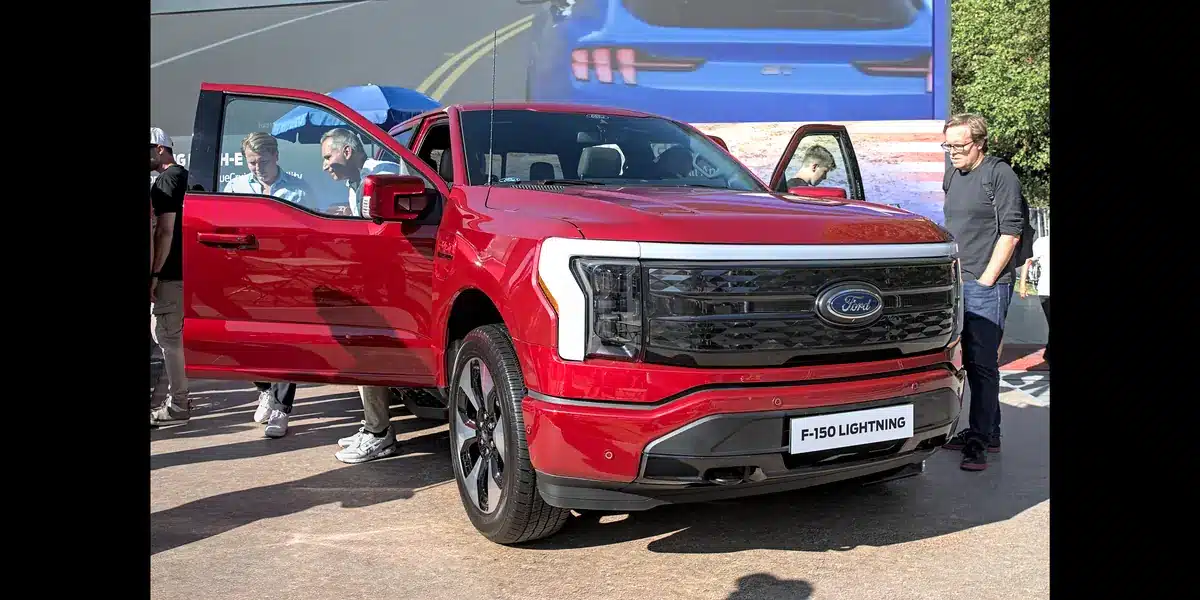
- F-150 Lightning
Warranty Coverage
- 8 years or 100,000 miles
- 70% minimum battery capacity retention
Ford’s warranty protects the battery against manufacturing defects and excessive capacity loss during normal vehicle use. While it doesn’t offer Tesla’s higher mileage limits, it still provides solid protection for most drivers.
Ford’s straightforward warranty terms also make it easy for new EV buyers to understand what is covered.
The E-Transit van sits under the same 8-year/100,000-mile battery warranty, with one commercial twist: on E-Transit cutaway and chassis-cab versions, Ford sets the excessive-loss threshold at 65% of original capacity instead of 70%. Fleet buyers comparing the E-Transit against gasoline vans should weigh that lower bar alongside the van’s lower running costs.
Mercedes-Benz Battery Warranty
Mercedes-Benz combines an industry-standard battery warranty with support from its premium dealer network.
Standard Coverage
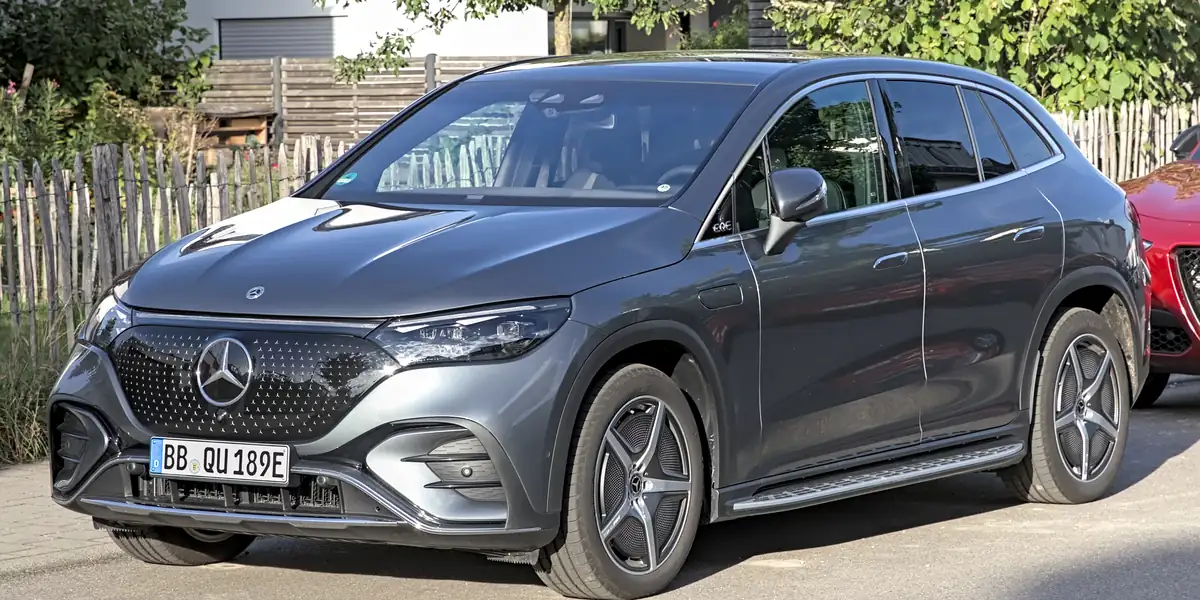
In the US, the EQE and EQS — sedans and SUVs — carry a 10-year/155,000-mile battery warranty, the longest of any brand in this comparison. The smaller EQB is covered for 8 years/100,000 miles. Mercedes states the capacity guarantee in amp-hours for each model (204 Ah for the EQE and EQE SUV, 192 Ah for the EQS, 197 Ah for the EQS SUV), which works out to about 70% of the battery’s original capacity.
The 10-Year Term Is the US Standard
The long Mercedes term is sometimes described online as a non-US offer. It is not: the 10-year/155,000-mile coverage is the standard US battery warranty for the EQE and EQS lines in Mercedes-Benz USA’s own warranty booklet. Outside the US, Mercedes expresses the same promise through its Battery Certificate, at up to 10 years or 250,000 km for the EQE and EQS.
Brands That Offer Even Longer Battery Coverage
Although Tesla, Ford, and Mercedes receive most of the attention, a few manufacturers provide even longer warranty periods.
1. Hyundai
Hyundai offers one of the longest EV battery warranties available.
Coverage
- 10 years
- 100,000 miles
- 70% battery capacity guarantee
For buyers planning to keep their EV for a decade, Hyundai offers excellent long-term protection.
2. Kia
Kia provides warranty coverage similar to Hyundai.
Coverage
- 10 years
- 100,000 miles
- 70% battery capacity guarantee
The extra two years compared to many competitors can reduce long-term ownership costs.
3. Nissan
Nissan’s LEAF warranty is unique. It is tied to the number of “bars” on the battery power gauge.
- Coverage: 8 years or 100,000 miles.
- Capacity Guarantee: Battery replacement if capacity drops below 9 bars out of 12 (roughly 70–75%), a higher threshold than the typical 70%.
US EV Battery Warranty Laws: The Minimums Behind These Numbers
Before comparing brands, know the legal floor every warranty below is measured against. US federal rules require at least 8 years or 100,000 miles of high-voltage battery coverage on new EVs, including protection against excessive degradation. A warranty offering exactly 8 years, 100,000 miles, and 70% capacity is meeting the minimum — not beating it.
California goes further: under the state’s emissions warranty rules (CCR §1962), high-voltage batteries in qualifying vehicles are covered for 10 years or 150,000 miles — and the same applies in other states that adopt California’s emission warranty provisions. For the full legal picture, see our complete guide to what an EV battery warranty covers.
Complete EV Battery Warranty Comparison Table
| Manufacturer | Key Models | Warranty | Mileage | Capacity Guarantee |
|---|---|---|---|---|
| Tesla | Model S / X | 8 years | 150,000 miles | 70% |
| Tesla | Model 3 / Y Long Range & Performance | 8 years | 120,000 miles | 70% |
| Tesla | Model 3 / Y Standard Range | 8 years | 100,000 miles | 70% |
| Ford | Mustang Mach-E, F-150 Lightning, E-Transit | 8 years | 100,000 miles | 70% |
| Mercedes-Benz | EQE, EQS (incl. SUVs) | 10 years | 155,000 miles | 70% |
| Mercedes-Benz | EQB | 8 years | 100,000 miles | 70% |
| Hyundai | IONIQ 5, Kona Electric | 10 years | 100,000 miles | 70% |
| Kia | EV6, Niro EV | 10 years | 100,000 miles | 70% |
| Chevrolet | Bolt EV, Ultium EVs | 8 years | 100,000 miles | 75% |
| Nissan | LEAF | 8 years | 100,000 miles | Around 75% (9 of 12 bars) |
Chevrolet note: GM’s own EV warranty booklet sets Chevrolet’s capacity trigger at 75% — the battery is repaired or replaced if capacity falls below 75% of its original value. The 60% figure in some older articles traces to Bolt-era owner’s-manual language about expected degradation, not the warranty trigger.
What Does an EV Battery Warranty Cover?
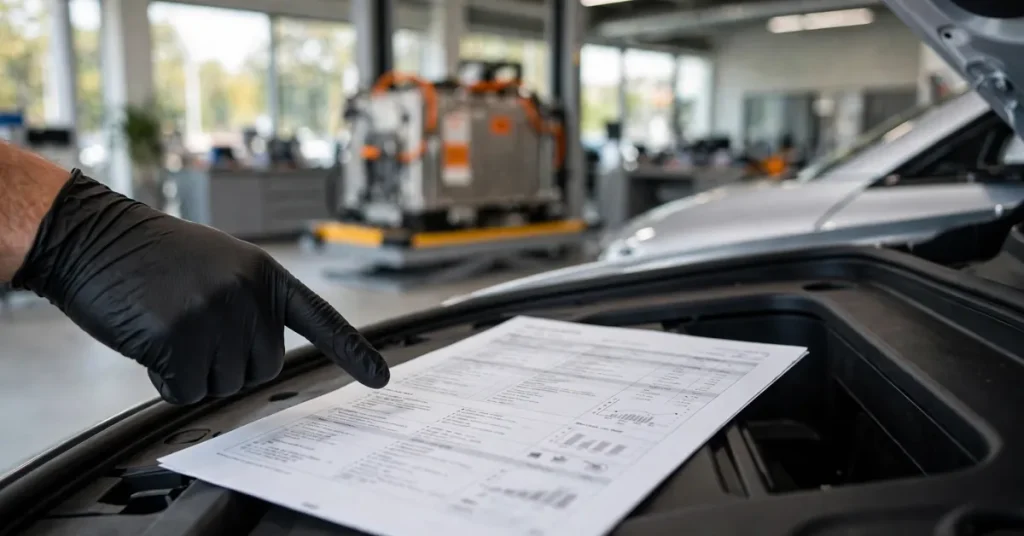
An EV battery warranty protects you against problems that happen because of defects in the battery or excessive battery capacity loss during the warranty period.
Most manufacturers cover:
- High-voltage battery pack
- Battery cells
- Manufacturing defects
- Battery capacity loss below the guaranteed level
- Battery repairs or replacement when warranty conditions are met
For most brands, the battery must lose more capacity than the warranty allows before it qualifies for replacement.
For example, if the warranty guarantees 70% battery capacity, a battery that still holds 75% capacity would normally not qualify for replacement.
If your battery is no longer covered, our Tesla battery replacement cost guide explains the expected repair costs.
What Isn’t Covered?
Even the best EV battery warranty has limits.
Most manufacturers do not cover:
- Damage caused by accidents
- Flood or fire damage
- Unauthorized battery repairs
- Battery modifications
- Racing or vehicle misuse
- Damage caused by improper charging equipment
- Normal battery aging that remains within the warranty limits
Reading the warranty booklet before buying an EV helps you understand exactly what is and is not included.
How Battery Capacity Warranty Works
Many EV owners worry when they notice their driving range becoming shorter over time. However, some battery degradation is completely normal.
Manufacturers expect lithium-ion batteries to slowly lose capacity as they age. That is why most warranties focus on minimum battery capacity instead of promising the battery will stay like new forever.
Here’s a simple example:
- New battery: 100% capacity
- After several years: 92% capacity
- Later: 85% capacity
This gradual loss is considered normal.
The warranty usually comes into effect only if the battery drops below the guaranteed capacity level, which is commonly 70%.
If that happens during the warranty period, the manufacturer will inspect the battery using diagnostic tools. If testing confirms the battery qualifies under the warranty terms, they may repair or replace the battery pack.
This is why battery degradation and battery failure are not the same thing. A battery can lose some capacity over time and still operate normally without needing replacement.
Our Tesla battery degradation guide explains how batteries naturally lose capacity over time and when it becomes a warranty concern. Want to estimate how fast your own battery may lose capacity? Try our EV Battery Degradation Calculator to compare typical degradation against your warranty terms.
What Can Void an EV Battery Warranty?
An EV battery warranty protects you from manufacturing defects, but it does not cover every situation. If the battery is damaged because of misuse or unauthorized work, the manufacturer may reject your warranty claim.
Common reasons a battery warranty may become void include:
- Installing unauthorized battery modifications
- Opening or repairing the battery pack outside an approved service center
- Damage caused by accidents or collisions
- Flood or fire damage
- Using the vehicle for racing or other extreme conditions
- Ignoring manufacturer service requirements when they directly contribute to the problem
Before making any changes to your EV, check the warranty terms or ask your dealer. A simple mistake could leave you responsible for a battery replacement that costs thousands of dollars.
If your battery starts showing warning signs, the Tesla battery troubleshooting guide can help identify common problems before they become serious.
EV Battery Warranty vs Vehicle Warranty
Many first-time EV buyers think the battery warranty and the vehicle warranty are the same. They are separate warranties that cover different parts of the car.
| Feature | EV Battery Warranty | New Vehicle Warranty |
|---|---|---|
| Covers | High-voltage battery | Most vehicle components |
| Typical Length | 8–10 years | 3–5 years |
| Mileage | 100,000–150,000 miles | Usually 36,000–60,000 miles |
| Includes Capacity Guarantee | Yes | No |
The battery warranty focuses on protecting the most expensive part of the vehicle, while the vehicle warranty covers items such as the suspension, electronics, interior components, and other factory-installed parts.
Does DC Fast Charging Void Your Battery Warranty?
No. Using a DC fast charger does not void your battery warranty.
Manufacturers design modern EV batteries to support both AC charging and DC fast charging. They understand that drivers will use public fast chargers during road trips and daily travel.
However, frequent fast charging may increase battery wear slightly over many years compared with mostly Level 2 charging. That doesn’t automatically mean the battery qualifies for a warranty replacement.
What matters is whether the battery drops below the manufacturer’s guaranteed capacity during the warranty period.
For most drivers, using fast charging when needed is completely normal and is covered under the warranty.
How to Check If Your EV Battery Is Still Under Warranty
If you bought a used EV or cannot remember your warranty details, checking your coverage is usually straightforward.
You can:
- Check your owner’s warranty booklet.
- Contact an authorized dealership.
- Provide the vehicle’s VIN (Vehicle Identification Number).
- Review your service records.
- Check the manufacturer’s mobile app if available.
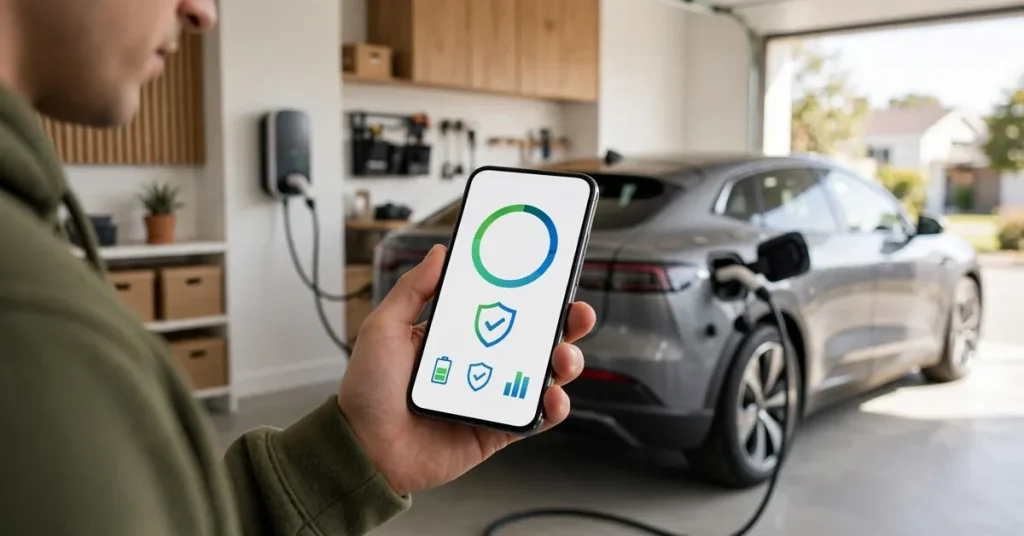
A dealer can confirm both the warranty period and whether your battery still qualifies for warranty coverage.
Which EV Brand Offers the Best Battery Warranty?
Each manufacturer has its strengths, so the best warranty depends on what matters most to you.
Best for High-Mileage Drivers: Tesla
Tesla offers up to 150,000 miles of battery coverage on the Model S and Model X, making it an excellent option for drivers who spend a lot of time on the road. Remember every warranty is years or miles, whichever comes first — a high-mileage commuter averaging 20,000 miles a year would exhaust a 100,000-mile warranty in about five years, not eight, which is exactly where Tesla’s higher mileage caps pay off.
Best for Long-Term Ownership: Hyundai and Kia
With 10 years of coverage, Hyundai and Kia provide extra peace of mind for owners planning to keep their vehicles for many years. Mercedes-Benz’s EQ models match the 10-year term and extend it to 155,000 miles, the longest mileage limit here.
Best Premium Experience: Mercedes-Benz
Mercedes combines a solid battery warranty with a well-established luxury service network. In the US, its EQE and EQS models carry the longest battery warranty in this comparison — 10 years or 155,000 miles.
Best Overall Value: Tesla
Tesla balances long mileage limits, a 70% capacity guarantee, and proven battery technology, making it one of the strongest overall choices for battery warranty protection.
Real-World Example
Consider a driver who, a few years into ownership, notices their EV’s driving range has dropped by nearly 35%. Longer trips become difficult, and they need to charge much more often.
Fortunately, their battery is still covered by the manufacturer’s 8-year warranty, which guarantees at least 70% battery capacity. After the dealer completes a battery health test, the results show the battery has fallen to about 65% capacity.
Because the battery is below the warranty threshold, the manufacturer replaces the entire battery pack at no cost.
Without warranty coverage, that repair would have cost well over $15,000 — which is why understanding your battery warranty before buying an EV is so important.
Understanding your vehicle’s expected driving distance also helps you monitor battery health. See our Tesla battery range comparison.
EV Battery Warranty FAQs
What is the minimum EV battery warranty in the US?
US federal rules require at least 8 years or 100,000 miles of high-voltage battery coverage on new EVs, including protection against excessive degradation — typically a 70% minimum capacity guarantee.
Do some states require a longer EV battery warranty?
Yes. California’s emissions warranty rules (CCR §1962) require 10 years or 150,000 miles of high-voltage battery coverage on qualifying vehicles, and the same applies in states that adopt California’s emission warranty provisions.
Is an EV battery warranty transferable if I sell the car?
In most cases the battery warranty follows the vehicle, not the owner, so the remaining coverage transfers to the next buyer — but terms vary by brand and model year, so verify transferability in the warranty booklet before you buy or sell.
Does DC fast charging void my EV battery warranty?
No. Manufacturers design EV batteries for both AC and DC fast charging. Frequent fast charging may add slight long-term wear, but it does not void the warranty — what matters is whether capacity drops below the guaranteed threshold during the warranty period.
What voids an EV battery warranty?
Accident damage, flooding or fire, unauthorized battery modifications or third-party pack repairs, racing or misuse, and non-compliant charging equipment. Normal gradual degradation above the guaranteed capacity threshold is not a defect and is not claimable.
How do I file an EV battery warranty claim?
Document your real-world range versus the EPA-rated range, then book a diagnostic with a manufacturer-certified service center — only their testing counts for a claim. Bring your warranty booklet and service records, and if a claim is denied, escalate to the manufacturer’s customer service with your documentation.
Should I buy an extended EV battery warranty?
It depends on how long you plan to keep the car and how much you drive. Compare the extended coverage cap, deductible, and capacity threshold against the federal minimum you already have before paying extra.
What is the battery warranty on a Mercedes EQE or EQS?
In the US, the Mercedes-Benz EQE and EQS — including the SUV versions — carry a 10-year or 155,000-mile battery warranty, the longest in this comparison. Mercedes states the capacity floor in amp-hours for each model, equal to about 70% of original capacity. The smaller EQB is covered for 8 years or 100,000 miles.
What is the Ford E-Transit battery warranty?
The E-Transit gets the same 8-year or 100,000-mile battery warranty as the Mustang Mach-E and F-150 Lightning, with a 70% capacity guarantee. On cutaway and chassis-cab versions, Ford sets the threshold at 65% instead.
Conclusion
A strong EV battery warranty protects you from one of the most expensive repairs an electric vehicle can require. While most manufacturers offer 8 years or 100,000 miles of coverage with a 70% battery capacity guarantee, there are meaningful differences that can affect long-term ownership.
Tesla stands out with higher mileage limits, making it an excellent choice for drivers who travel frequently. Hyundai and Kia offer longer warranty periods for buyers planning to keep their EV for many years. Mercedes-Benz delivers dependable coverage backed by a premium service network, with extended protection available on selected models in some markets.
No matter which EV you choose, always review the warranty details, understand what is covered, and ask the right questions before you buy. A few minutes spent comparing warranties today can save you thousands of dollars in future repair costs.
For daily care tips that help your EV battery last longer, explore: Best Practices to Extend Your Tesla Battery Life. To estimate ownership costs beyond the warranty, browse all of our free EV calculators and tools.
