
What Is Thermal Runaway in an EV Battery?

Built from peer-reviewed battery-safety research (including the Royal Society of Chemistry’s November 2026 stability review and ASME accelerating-rate-calorimetry tests), NHTSA recall records, Tesla’s emergency response guides, Sweden’s MSB fire statistics and the EV FireSafe incident database. Temperatures are stated with the event they measure, because on this topic a number without its event is meaningless.
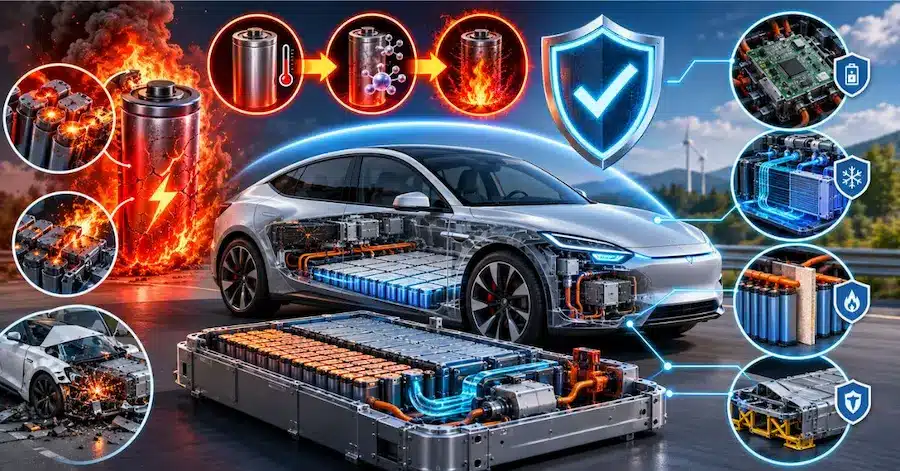
Thermal runaway is the failure every EV battery safety system exists to prevent: a single cell overheats, its internal chemistry starts generating heat faster than the cell can shed it, and the process feeds itself until the cell vents hot, flammable gas — and, if the heat reaches its neighbours, sets them off in turn. It is the starting point of almost every EV battery fire, and it is also widely misunderstood: it is not an explosion, it does not begin at one magic temperature, and in a modern EV it is genuinely rare.
This page explains it in the order a worried reader actually asks about it: what happens inside the cell, step by step; the real temperatures, split by battery chemistry — because an LFP cell and a high-nickel cell behave very differently; what has actually caused it in the real world, including the two largest battery recalls in history; the warning signs a driver can notice; how often it happens, with the sources and their limits stated; and what firefighters really do when it happens.
Quick answer
Thermal runaway is a self-feeding chain reaction inside a battery cell: damage or a defect creates an internal short, the cell’s layers break down one by one as it heats — the first chemical step begins near 90°C — and the cathode eventually decomposes, releasing heat and flammable gas faster than the cell can cool. If that heat ignites neighbouring cells, the runaway spreads through the pack: that spread is called thermal propagation.
Key figures: Cathode breakdown ≈200–210°C (NMC) · ≈220–225°C (NCA) · ≈270–300°C (LFP) · Measured peak in tests: ~1,000°C (high-nickel cell) vs ~491°C (LFP) · EV fire rate in Sweden’s national data: 0.004% of the EV fleet vs 0.08% of petrol/diesel cars in 2022
What Happens Inside the Cell, Step by Step
A runaway is a ladder of failures, each rung hotter than the last — which is why the early rungs matter: the process can still be interrupted there.
What starts the ladder?
It starts with a trigger that lets current flow where it should not: a manufacturing defect inside the cell, crash damage, an electrical fault or severe overheating creates an internal short circuit. The short generates heat, and at roughly 90°C the first chemical rung gives way — the protective SEI layer on the anode begins to decompose, exposing fresh anode material that reacts with the electrolyte and generates more heat.
(The stored version of this page listed electrolyte decomposition before this step; the SEI breakdown comes first, and the order matters because it is the earliest point at which a battery management system can see the temperature beginning to climb on its own.)
What happens at the final rungs?
Next, the separator — the thin film keeping anode and cathode apart — shrinks and then fails, at roughly 130°C for polyethylene and 165°C for polypropylene, turning a local short into a wholesale one. The cell’s temperature now runs away in earnest. The final rung is the cathode: at its decomposition temperature it breaks down and, in the nickel-based chemistries, releases oxygen that feeds the reactions inside the sealed cell.
The cell vents — a jet of hot, flammable, toxic gas — and may ignite. Three terms worth keeping separate, because reports mix them: venting is the gas release; thermal runaway is the self-feeding reaction in one cell; thermal propagation is that reaction spreading cell to cell, and it is propagation, not the first cell, that turns an incident into a vehicle fire.
The Temperatures, by Chemistry — With the Event Named
There is no single ‘thermal runaway temperature’: each chemistry gives way at a different point, and the honest comparison is of the same event in each.
| Chemistry | Cathode decomposition begins | Thermal stability |
|---|---|---|
| LFP | ~270–300°C | Most stable — and its cathode releases almost no oxygen |
| NMC 532 | ~210–230°C (between 622 and 111-class) | High |
| NMC 111/622 class | ~200–210°C | Moderate |
| NCA | ~220–225°C | Lower than the NMC mid-nickel grades |
| NMC 811 (high-nickel) | Lowest of the nickel family | Least stable |
What should you read from the table?
The stability order in that table — LFP most stable, then NMC 532, NMC 622, NCA, and high-nickel NMC 811 last — is the ordering in the Royal Society of Chemistry’s November 2026 review of cathode thermal stability, and it corrects a figure repeated across the internet (and in this page’s previous table): NCA is often quoted at ‘about 180°C’, which confuses early self-heating measurements with cathode decomposition. Measured properly, charged NCA decomposes at roughly 220–225°C.
Note also what the table does not show: the self-heating that instruments detect begins far earlier — accelerating-rate-calorimetry tests register it from roughly 90–160°C depending on chemistry — which is why ‘onset’ figures online range so wildly. They are measuring different rungs of the ladder in the section above.
Same test, two chemistries (ASME calorimetry programme): a high-nickel NMC cell began self-heating at 102.3°C, triggered into runaway at 156.5°C and peaked at 1,000°C — with 256 seconds between the first warning sign and the runaway. An LFP cell triggered at 189.7°C, peaked at 491°C — and gave 8,600 seconds (about 2.4 hours) of warning. Chemistry decides both how hot it gets and how much time everyone has.
What are the honest footnotes?
Two honest footnotes complete the picture. The LFP cell’s own cathode is stable beyond 500°C (Sandia National Laboratories); when an LFP cell does run away, the reaction is driven by its anode and electrolyte — one reason its peak temperature is half the nickel cell’s. And state of charge matters throughout: these figures are for charged cells, and a cell at low charge has far less energy to release. Our LFP vs NMC comparison covers the wider trade-offs between the two families.
What Actually Causes It: Defects, Damage and Abuse
Almost every real-world case traces back to an internal short circuit — the argument is only ever about what created the short.
What do factory defects cause?
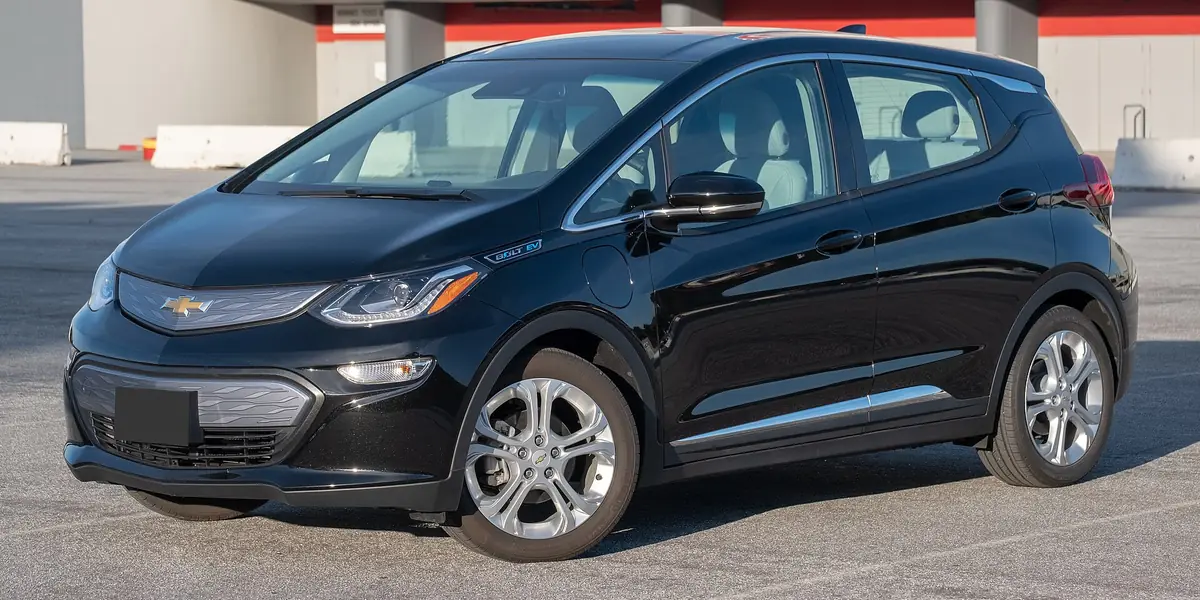
The largest cause category in the record is the one owners can do nothing about: defects built into the cell at the factory. The defining case is the Chevrolet Bolt EV. In a small number of LG cells, two defects occurred in the same cell — a torn anode tab and a folded separator — a combination that could short the cell from inside with no external trigger at all.
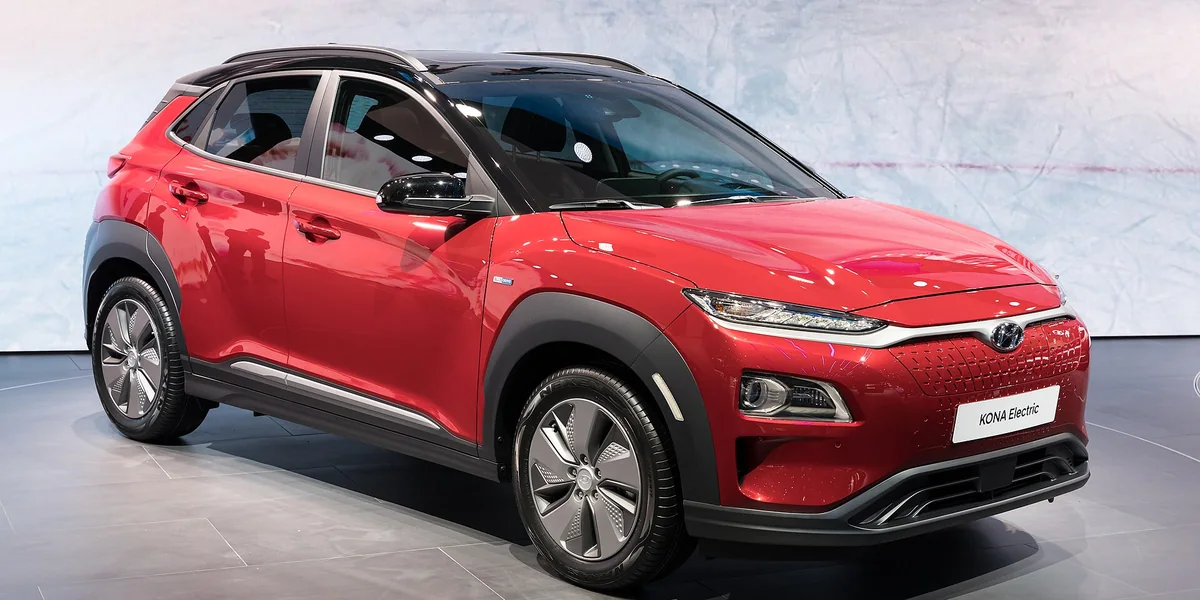
GM ultimately recalled every Bolt built, 141,685 vehicles (NHTSA campaign 21V-650), after at least 13 confirmed fires; the episode cost about $2.0 billion, of which LG reimbursed $1.9 billion, and the remedy became replacement of the battery modules. Hyundai’s Kona Electric followed the same pattern — a folded electrode tab in LG cells — with 81,701 vehicles recalled worldwide (about 4,700 in the US) after roughly 15–16 fires. Two lessons generalise: a single defective cell is enough, because propagation does the rest; and both cases were found and fixed through the recall system, which is why today’s packs carry the monitoring described below.
What damage after the factory causes it?
The second category is damage after the car leaves the factory. A severe crash can crush cells or tear the pack’s cooling and wiring, and the resulting short may not declare itself immediately — damaged EVs have caught fire hours or days after the collision, which is why responders treat a crashed EV as a live risk (our guide to what happens to an EV battery in a crash covers that process). Electrical abuse — charging faults or a failed battery management system allowing a cell to overcharge — can drive a cell up the same ladder from the inside.
External heat, such as a fire starting elsewhere in or under the car, can push cells past their first rungs without any defect. And water ingress into a damaged or defective pack — flood cars are the standing example — can create shorts that appear well after the water has dried. Cold weather, often blamed, is not a direct trigger: its real pathway is slower — charging a frozen battery plates lithium onto the anode, and that plating raises the internal-short risk over time.
Warning Signs — and What to Do
A runaway usually announces itself before it ignites: the signs are sensory, and the correct response is distance, not heroics.
What are the warning signs?
The warnings reported by fire services and manufacturers are consistent. A hissing or popping sound from the battery — cells venting. A sweet, chemical, solvent-like smell that does not belong. White vapour or smoke coming from under the car — vented gas, which can ignite seconds to minutes after it appears.
Dashboard warnings about the battery or electrical system, a sudden unexplained loss of range, or the car refusing to charge. Any one of these, especially after a crash or a charging fault, means the same thing: stop the car somewhere open if you are driving, get everyone out and away from it, and call the emergency services.
What should you do?
Do not try to move it into or out of a garage, do not try to fight a battery fire with a home extinguisher — the reaction is inside a sealed pack your extinguisher cannot reach — and do not go back for belongings. Tell the dispatcher it is an electric vehicle with a suspected battery fire; crews respond to that information with different tactics and much more water.
How Rare Is It, Really?
By the best national data available, an EV is roughly twenty times less likely to catch fire than a petrol or diesel car — and the figures behind that claim deserve to be shown, with their limits.
What does Sweden’s national data show?
The cleanest dataset is Sweden’s, because the Swedish Civil Contingencies Agency (MSB) counts fires against the whole registered fleet. In 2022 Sweden recorded 23 fires in electric and plug-in hybrid cars out of a fleet of about 611,000 — 0.004% — against about 3,400 fires among 4.4 million petrol and diesel cars, 0.08%.
Per vehicle, that is about a twenty-fold lower rate, and the updated figures (38 fires in 2023, 40 in 2024, against a fleet approaching 900,000) keep the rate in the same place. EV FireSafe, which tracks verified EV battery fire incidents worldwide, logged about 1,072 incidents across the global fleet’s first decade — a rate on the order of 0.0012% of EVs for 2010–2020.
What do the other datasets say?
The most-quoted American figures, an AutoInsuranceEZ analysis of NTSB counts and sales data, put battery-electric cars at 25.1 fires per 100,000 vehicles sold against 1,529.9 for gasoline cars — a much bigger ratio, but built on a per-vehicles-sold denominator and a young EV fleet, so treat it as an order-of-magnitude indication, not a precise statistic (a version of this page once claimed a rate ‘per vehicle-mile traveled’; no such dataset exists, and the claim has been removed). The honest summary: rarer per vehicle by every dataset that exists — and, as the next section explains, harder work when it does happen.
If It Burns: Why EV Fires Are a Firefighter Problem
An EV battery fire is not unextinguishable — it is a long, water-hungry cooling job with a re-ignition watch at the end of it.
How much water does it take?
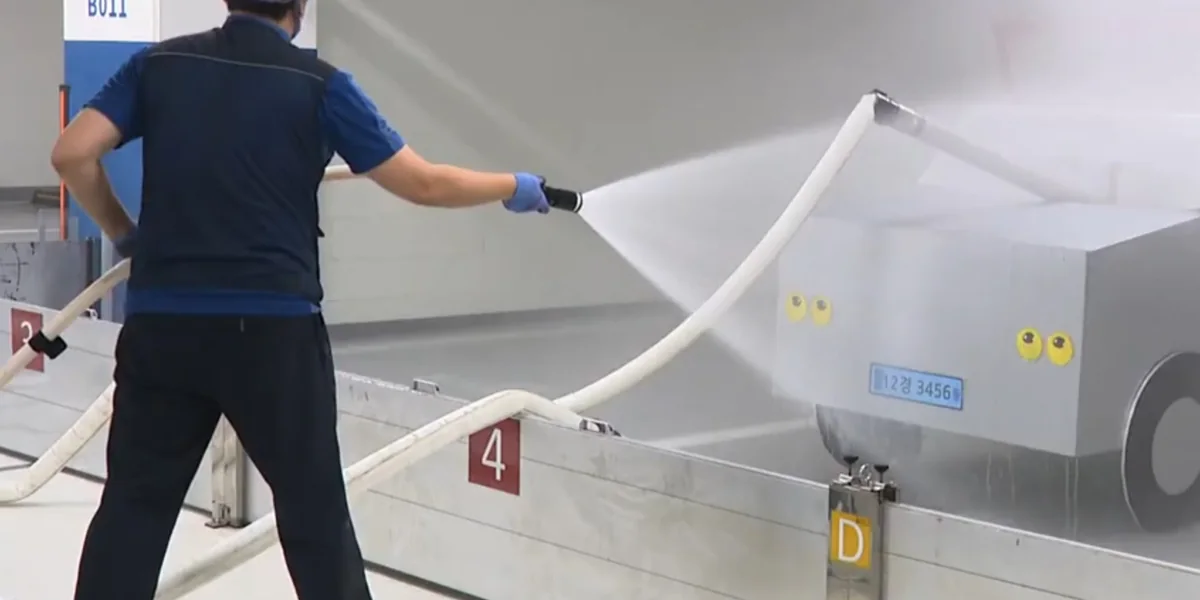
Tesla’s emergency response guides — the documents crews actually work from — call for roughly 3,000 gallons of water applied directly to the battery for a Model S fire, 3,000–8,000 gallons for a Model Y, and up to 24 hours of cooling and monitoring, with thermal-imaging checks before the car is released and storage at least 50 feet from other vehicles and structures afterwards.
The water’s job is cooling, not smothering: the reaction inside the pack generates its own heat and, in nickel chemistries, some of its own oxygen, so the only reliable strategy is to pull the temperature down and keep it down until every cell is spent or stable. The same guides advise against submerging the car in a water container — a tactic some European crews use and many reports present as standard; the manufacturer whose cars are most involved says not to.
Why the long watch?
Re-ignition is the reason for the long watch: a damaged pack holds ‘stranded energy’ in cells that did not burn, and the US National Transportation Safety Board (report SR-20/01) documented EVs re-igniting in tow yards days after the original fire. None of this makes the fire unbeatable — crews extinguish them routinely — but it is measured in hours and thousands of gallons, not minutes and a single hose line.
Prevention: Design, Monitoring and the New Rules
Every layer of a modern pack exists to stop one cell becoming a burning car: catch the failure early, starve it of neighbours, and give its gas somewhere to go.
What are the three layers?
The first layer is the battery management system, which watches cell voltages, currents and temperatures and can isolate a failing section or shut the pack down. One correction to a claim this page used to make: the BMS does not measure every cell’s temperature — production systems sense temperature at selected points and infer the rest from voltages and models, which is exactly why the early-warning game is hard and why research into gas and pressure sensors (a runaway vents before it flames) is active.
The second layer is thermal: liquid cooling keeps cells in their safe band so no cell drifts toward the ladder’s first rung, and cell-level fuses and disconnects cut a shorted cell out of the circuit. The third layer assumes failure anyway: spacing, insulation and fire barriers between cells or modules slow propagation, and designed vent paths let a failing cell’s gas escape without pressurising the pack — the design philosophy behind approaches such as BYD’s Blade Battery, which spaces long LFP cells as structural members.
What do the new rules require?
Regulation is now written around the ladder itself. China’s GB 38031-2020 first required a five-minute warning before a battery fire could endanger the cabin — the same five-minute warning in the UN’s Global Technical Regulation No. 20 — and its successor, GB 38031-2025, goes much further: from July 2026, newly approved vehicles in China must show no fire and no explosion for two hours after a single cell runs away.
The United States has its own new rule: FMVSS 305a, finalised in December 2024, modernises the federal EV safety standard (electrolyte spillage, shock protection and battery-fire warning requirements), with compliance phasing in from September 2027. The direction on both sides of the Pacific is the same — the pack must either not propagate, or give its occupants generous, guaranteed warning. Thermal runaway protection in an EV battery is becoming a tested legal requirement, not a marketing claim.
Frequently Asked Questions
What is the main cause of thermal runaway?
An internal short circuit inside a cell — current flowing where it should not, generating heat the cell cannot shed. What creates that short varies: a factory defect (the Bolt and Kona recalls), crash damage, an electrical fault or overcharge, or, over time, lithium plating from charging a very cold battery. The short is the cause; the defect or damage is what led to it.
Which battery type is most prone to thermal runaway?
High-nickel NMC (the 811 family) is the least thermally stable of the common EV chemistries, then NCA, then the mid-nickel NMC grades, with LFP the most stable by a wide margin — its cathode decomposes at roughly 270–300°C and releases almost no oxygen, and in testing its runaway peaked at about half the temperature of a high-nickel cell’s. Chemistry sets the risk; the pack’s design decides the outcome.
Can thermal runaway be stopped once it starts?
Inside a single cell, once the cathode begins to decompose, no — the reaction is self-sustaining and has to run its course or be cooled from outside. What can be stopped is the spread: cooling, barriers and venting can keep one cell’s runaway from becoming the whole pack’s. That is why firefighter tactics are about volume and time, and why the regulations test propagation and warning time rather than promising prevention.
How common are EV battery fires?
Rare by every dataset that exists. Sweden’s national count put EV and plug-in hybrid fires at 0.004% of that fleet in 2022 against 0.08% for petrol and diesel cars — about twenty times lower per vehicle. US analyses report larger ratios on different methods. The fires that do happen burn longer and need far more water than a fuel fire, which is why they attract attention out of proportion to their frequency.
Is it safe to leave my EV plugged in overnight?
Yes — this is the use case the car is designed for. The battery management system controls the charge, stops at the limit you set, and monitors cell voltages and temperatures throughout; a modern EV is never simply ‘left connected to the mains’ unmanaged. The documented fire cases trace to cell defects and damage, not to ordinary overnight charging, and the recalls that addressed those defects are the reason the monitoring exists in its current form.
Do EV batteries explode?
Almost never in the sense the word suggests. A failing cell vents hot gas — sometimes fast enough to be called a deflagration if that gas cloud ignites in a confined space, which responders plan for — but the battery itself does not detonate. Our separate guide asks can EV batteries explode and works through what the videos of EV fires are actually showing.
Conclusion
Thermal runaway is a chemistry problem with an engineering answer: it cannot be made impossible, so the pack is built to detect it early, contain it locally, and give everyone time.
Strip away the frightening footage and the facts are these. A runaway begins with an internal short, climbs a known ladder of failures — SEI breakdown near 90°C, separator failure, cathode decomposition — and its severity is set by chemistry: an LFP cell that peaks near 490°C with hours of warning is a different event from a high-nickel cell peaking near 1,000°C in minutes.
It has caused the two largest battery recalls in history, both traced to single-cell factory defects; it happens, on the best national data, about twenty times less often per vehicle than a petrol or diesel fire; and when it happens it demands thousands of gallons of water and a day of vigilance rather than a few minutes with a hose.
For an owner, the practical residue is small: know the warning signs, treat a crashed or flood-damaged EV as a risk until it is inspected, keep recall work done, and otherwise charge and drive as the car was designed to be used. For the industry, the trajectory is set by the new rules — two hours without fire or explosion in China’s latest standard, a modernised federal rule in the US — toward packs in which one cell’s worst day is a repair bill, not a fire.
