What Is EVgo and Where Can You Find It?

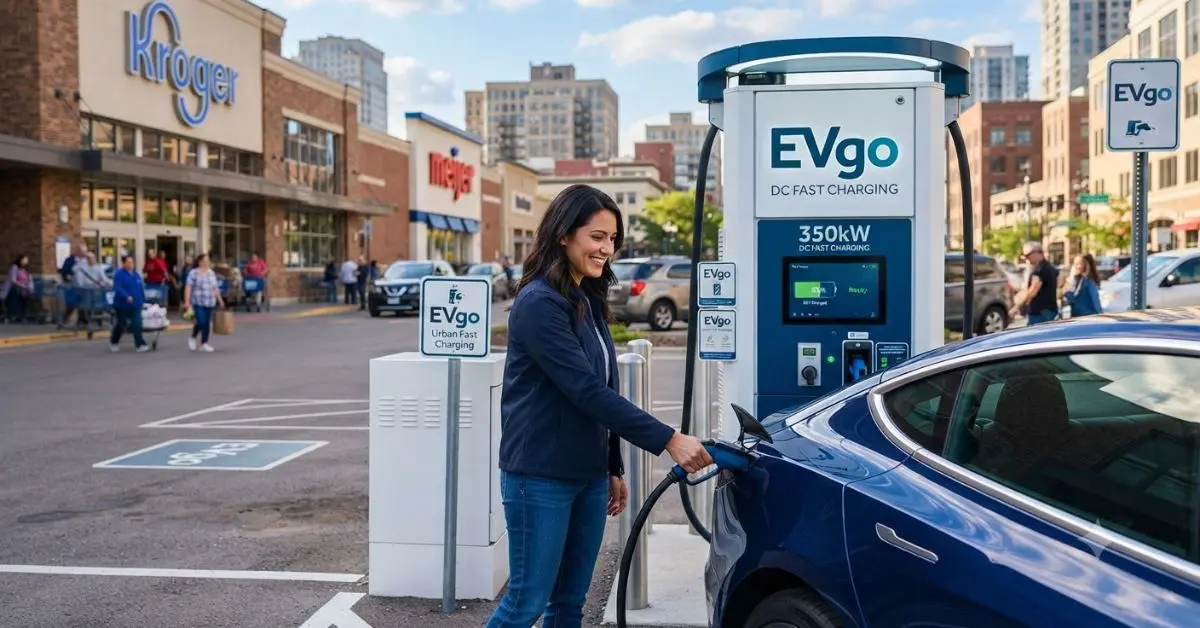
Not every EV driver has a charger at home. EVgo makes fast charging simple by placing stations in cities, shopping centers, and busy neighborhoods.
EVgo is one of the largest public DC fast-charging networks in the United States — with over 1,000 fast-charging locations primarily in metropolitan areas and urban centers. Unlike Electrify America (highway-focused) or ChargePoint (primarily Level 2), EVgo specializes exclusively in DC fast charging in cities and suburbs — making it the most convenient urban fast-charging option for EV drivers who live in or near major American cities. EVgo stations offer 50–350 kW charging and accept CCS1 and NACS connectors.
Prefer charging overnight at a hotel or apartment instead? See our guide to the Blink Charging network.
EVgo Network: Key Facts
| Specification | Detail |
|---|---|
| US charging locations | 1,000+ |
| US charging stalls | 3,000+ |
| Charging type | DC Fast Charging only (no Level 2) |
| Power range | 50–350 kW |
| Connectors | CCS1, NACS (2025+ stalls) |
| Cost (no membership) | $0.34–$0.59/kWh (varies by location) |
| EVgo Plus membership | $7.99/month — discounted per-kWh rates |
| Payment methods | App, credit card, RFID, Plug & Charge |
| Location focus | Urban and suburban — grocery, retail, apartments |
| Tesla partnership | EVgo using Tesla hardware at some new locations (2024+) |
Where to Find EVgo Stations
EVgo’s primary differentiator is its urban and suburban location strategy — placing DC fast chargers where people live, work, and shop rather than only on highway corridors. Key EVgo location types include Kroger grocery stores, Meijer stores, King Soopers, shopping centers, apartment complexes, and urban parking garages. This makes EVgo particularly valuable for EV drivers in major metro areas (New York, Los Angeles, Chicago, Houston) who may not have home charging and need reliable urban fast charging as a substitute.
How to Use EVgo
Use the EVgo App
Download the app and create an account to start charging sessions, track energy usage, and view your charging history. EVgo Plus members also receive discounted charging rates through the app.
Pay With a Credit Card
Most EVgo stations accept contactless credit card payments directly at the charger. Standard walk-up pricing applies.
Activate Charging With an RFID Card
EVgo offers an RFID card that lets you start charging without opening the mobile app.
Use Plug & Charge
Compatible vehicles can automatically identify themselves and bill the charging session to the registered EVgo account without any manual steps.
EVgo Plus Membership: Is It Worth It?
EVgo Plus at $7.99/month provides discounted per-kWh rates — typically reducing the standard $0.34–$0.59/kWh walk-up rate by approximately $0.05–$0.12/kWh. For a typical 10–80% session on a 75 kWh EV delivering approximately 52 kWh, the membership saves approximately $2.60–$6.24 per session. EVgo Plus pays for itself if you complete approximately 2 DC fast sessions per month. For urban EV drivers who rely on EVgo as a primary charging source (no home charger), EVgo Plus is worth the $7.99/month subscription.
EVgo and Tesla Hardware Partnership
In 2024, EVgo partnered with Tesla to deploy Tesla-built Supercharger V4 hardware at new EVgo locations. The partnership improves station reliability by using Tesla’s proven hardware design and manufacturing quality.
These new stations support NACS connectors and include display screens for drivers who prefer to pay without using the mobile app. The partnership also helps EVgo expand its network with more reliable charging equipment while allowing Tesla to generate revenue through hardware licensing.
EVgo vs Electrify America: Which Is Better for Urban EV Drivers?
| Feature | EVgo | Electrify America |
|---|---|---|
| Urban station density | Stronger | Moderate |
| Highway corridor coverage | Limited | Strong |
| Peak power | Up to 350 kW | Up to 350 kW |
| Stalls per station | 2–6 typical | 4–10 typical |
| Membership cost | $7.99/month (Plus) | $4/month (Pass+) |
| Grocery / retail integration | Strong (Kroger, Meijer) | Strong (Walmart) |
Want to see how EVgo stacks up against every network by size? See our ranking of the best EV charging network by stations and fast chargers.
Conclusion
EVgo operates the leading city DC fast-charging network in the U.S. It has over 1,000 locations in cities and suburbs where most EV drivers live. You can charge your car easily while you run errands at grocery stores and other shops.
The EVgo Plus membership costs $7.99 a month and saves money for regular users. A partnership with Tesla also improves the quality of new charging stations. If you live in a city and cannot charge at home, EVgo offers the best solution. You can quickly charge your battery while you shop or park in the city.
Curious how EVgo’s uptime compares to other networks? See our breakdown of which EV charging network is most reliable.
FAQs
Can Tesla vehicles use EVgo chargers?
Yes. Tesla vehicles can use compatible EVgo stations that support NACS, or the appropriate adapter where available.
Is EVgo better than Electrify America for city driving?
For most urban drivers, yes. EVgo has a stronger presence in cities and suburban retail locations, while Electrify America offers better coverage along major highways.
