
What Is Thermal Throttling in an EV BMS?

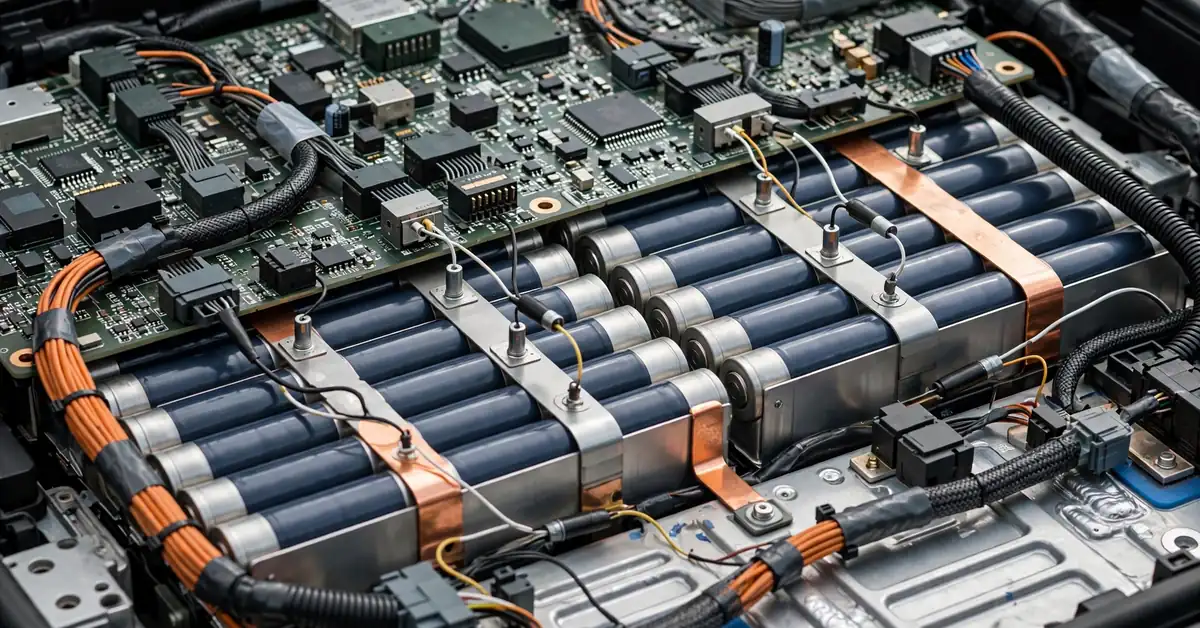
Thermal throttling in an EV BMS is the deliberate reduction of charging or discharging power once battery temperature approaches an unsafe limit, trading peak performance for pack safety and longevity. It’s a controlled, gradual response, not a sudden emergency shutdown.
Why “Throttling” Rather Than a Hard Cutoff
The BMS generally prefers a graduated response over an abrupt one. Rather than allowing full power right up until a temperature limit and then cutting off entirely, thermal throttling progressively reduces available power as temperature climbs toward that limit, giving the cooling system time to catch up and avoiding a jarring, all-or-nothing experience for the driver.
When Thermal Throttling Typically Activates
During Repeated Fast Charging
DC fast charging generates significant heat, and back-to-back fast-charging sessions without adequate cooldown time can push pack temperature high enough that the BMS begins reducing charge current to protect the cells, a pattern sometimes noticeable on long road trips with frequent charging stops.
During Sustained High-Power Driving
Extended hard acceleration, towing, or high-speed driving in hot ambient conditions can raise pack temperature enough to trigger discharge-side throttling, reducing available power for acceleration.
In Extreme Ambient Heat
Very hot outside temperatures reduce the cooling system’s overall capacity to remove heat, making throttling more likely to trigger sooner than it would in milder conditions.
How Throttling Actually Reduces Power
Rather than a single fixed cutoff, the BMS typically applies a sliding scale, reducing the maximum allowable charge or discharge current progressively as temperature rises through a defined range, then restoring full capability as temperature drops back down. This is directly tied to the same state-of-power calculations the BMS uses more generally to determine safe power limits.
Why Thermal Throttling Protects Long-Term Battery Health
Allowing a battery to repeatedly operate at high temperature under high current accelerates chemical degradation and increases safety risk. Throttling exists specifically to prevent that repeated stress, trading some short-term performance for meaningfully better long-term capacity retention and safety margin.
How Drivers Actually Experience Thermal Throttling
- DC fast-charging speed noticeably drops during a second or third consecutive fast-charge session
- Acceleration feels softer than usual during extended hard driving in hot weather
- A dashboard message or icon may indicate reduced power due to battery temperature
How to Minimize Unwanted Thermal Throttling
Allowing brief cooldown time between fast-charging sessions, using preconditioning before a planned fast charge, and avoiding unnecessary sustained high-power driving in extreme heat all help keep the pack within a range where throttling isn’t needed as often.
| Trigger | Typical Result |
|---|---|
| Back-to-back fast charging | Reduced charge current on subsequent sessions |
| Sustained hard acceleration in heat | Reduced available power for acceleration |
| Extreme ambient temperature | Lower threshold before throttling engages |
Conclusion
Thermal throttling in an EV BMS is a controlled, gradual reduction of power that activates as battery temperature approaches unsafe limits, protecting cells from the accelerated degradation and safety risk that come with sustained high-temperature, high-current operation. It’s not a malfunction — it’s the BMS deliberately prioritizing long-term battery health over short-term peak performance.
FAQs
Is thermal throttling a sign something is wrong with my EV?
Not necessarily — it’s a normal protective response, though frequent, severe throttling in mild conditions could indicate a cooling system issue worth checking.
Can preconditioning prevent thermal throttling?
It helps by starting the pack in a better temperature range, though it can’t fully prevent throttling during very demanding conditions like repeated back-to-back fast charging.
Does thermal throttling damage the battery?
No, it’s specifically designed to prevent damage by reducing stress before temperatures reach genuinely harmful levels.
