
What Safety Features Does an EV BMS Have?

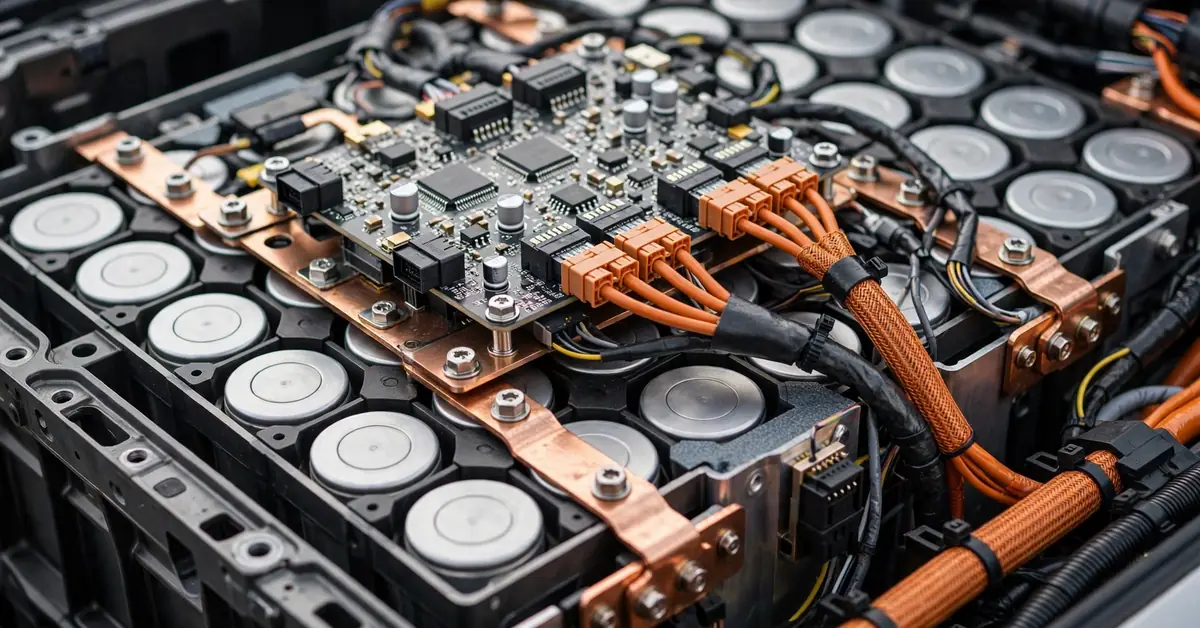
An EV BMS safety feature set includes overvoltage and undervoltage protection, overcurrent and short-circuit protection, overtemperature management, ground fault detection, high-voltage interlock, and cell isolation capability, working together as layered defenses against every major failure mode a battery pack can experience. No single feature is treated as sufficient on its own.
Why BMS Safety Design Is Built as Layers, Not One Big Switch
A battery pack can fail in several distinct ways, electrically, thermally, or through physical damage, and each failure mode needs its own dedicated protection mechanism. This is why a modern BMS runs many specialized safety systems simultaneously rather than relying on one general-purpose safeguard.
Voltage-Based Protections
Overvoltage Protection
Continuously monitors every individual cell, cutting or reducing charge current the moment any cell approaches its safe upper voltage limit, preventing the conditions that lead to thermal runaway.
Undervoltage Protection
Cuts the discharge circuit when any cell reaches its minimum safe voltage, protecting against the permanent damage that comes from over-discharging lithium-ion cells.
Current-Based Protections
Overcurrent Protection
Detects current spikes beyond safe operating limits and can interrupt the circuit through contactors within microseconds, catching short circuits and other electrical faults before they escalate.
High-Voltage Fuses
Serve as a mechanical backup layer that operates independently of any software decision, providing protection even in the unlikely event the electronic response is somehow delayed.
Thermal Protections
Overtemperature and Rate-of-Rise Monitoring
Tracks both absolute temperature and how quickly it’s changing, since a rapid, abnormal rise is often the earliest detectable sign of a developing internal fault.
Active Thermal Management
Commands cooling or heating hardware to keep the pack within its safe operating range, reducing power directly if the thermal system alone can’t keep pace.
Electrical Safety Protections
High Voltage Interlock (HVIL)
A safety loop that verifies all high-voltage connectors and covers are properly secured, preventing the system from energizing if a connection is compromised.
Ground Fault / Insulation Resistance Monitoring
Continuously checks the resistance between the high-voltage system and the vehicle chassis, catching potentially dangerous electrical leakage paths.
Fault Isolation Capabilities
Cell/Module Isolation
In more advanced architectures, the BMS can electrically isolate a specific faulty cell or module, preventing a localized problem from affecting the rest of the pack.
Contactor Shutdown
The ultimate safety response: physically disconnecting the entire battery pack from the rest of the vehicle’s high-voltage system when a serious fault is detected.
| Safety Feature | Protects Against |
|---|---|
| Overvoltage/undervoltage protection | Overcharge and over-discharge damage |
| Overcurrent protection + fuses | Short circuits and electrical faults |
| Thermal monitoring + management | Overheating and thermal runaway |
| HVIL | Improperly connected high-voltage components |
| Ground fault detection | Dangerous electrical leakage to chassis |
| Cell isolation/contactor shutdown | Escalation of a detected fault |
Conclusion
An EV BMS safety feature set spans voltage protection, current protection, thermal management, electrical safety monitoring, and fault isolation capability, all operating simultaneously as layered defenses. This redundancy is deliberate: if one protection layer somehow misses a developing issue, another has a genuine chance to catch it before conditions become genuinely dangerous.
FAQs
Are all these safety features required by regulation?
Many are increasingly required or strongly encouraged by evolving automotive safety standards, though specific implementation varies by manufacturer and region.
Can a BMS safety feature fail?
Individual components can fail, which is exactly why layered, redundant protection exists rather than relying on any single mechanism.
Do all EVs have the same level of BMS safety sophistication?
No, sophistication varies by manufacturer and vehicle platform, though baseline safety requirements apply broadly across the industry.
