Regenerative Braking in EVs: How It Works
Regenerative braking turns your EV’s motor into a generator to recover energy during deceleration. Learn how it works, how much range it adds, and one-pedal driving explained.

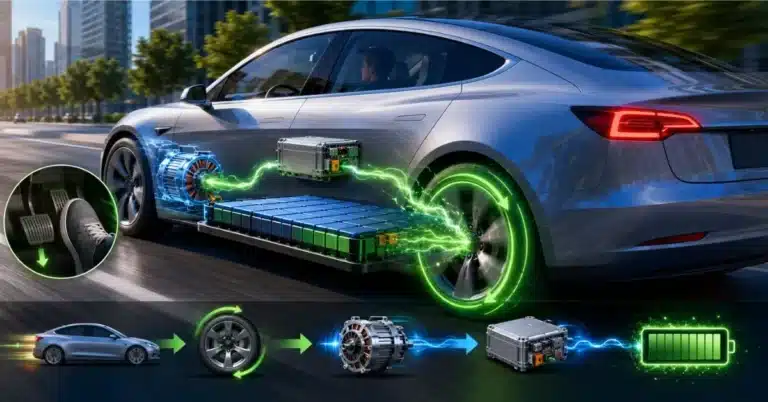
Regenerative braking turns your EV’s motor into a generator to recover energy during deceleration. Learn how it works, how much range it adds, and one-pedal driving explained.
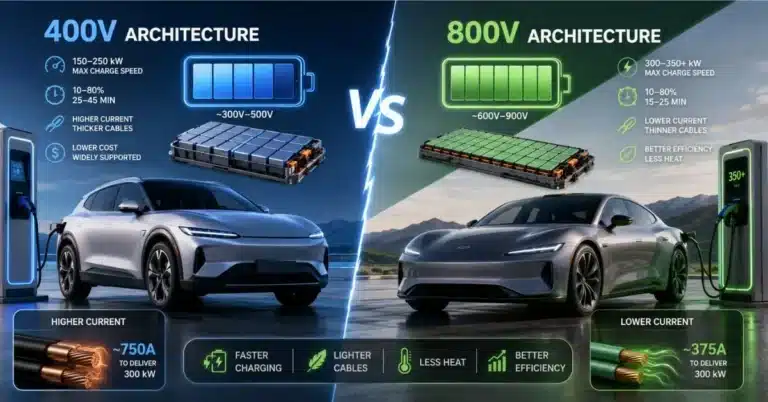
400V vs 800V EV battery architecture explained. Learn how voltage affects charging speed, efficiency, cable weight, and which EVs use each system.
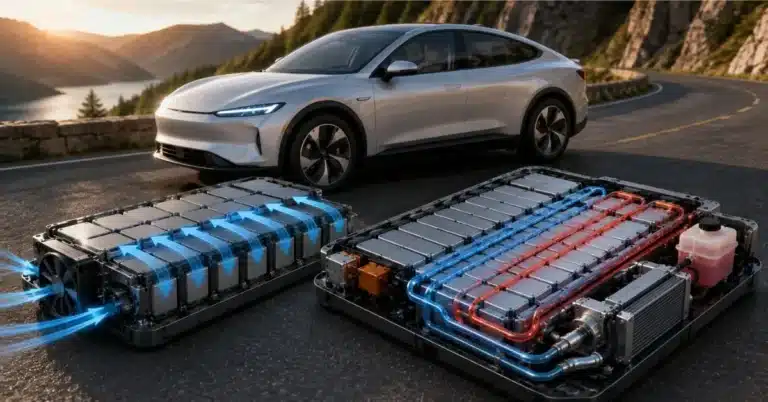
Liquid cooling vs air cooling in EV battery packs: which is better? Learn how each system works, real-world performance differences, and why liquid cooling dominates modern EVs.
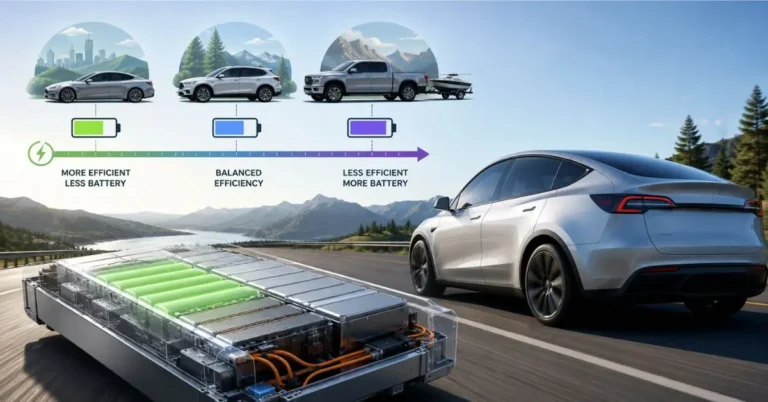
How much does EV battery size affect range? Learn the range formula, efficiency by vehicle type, real-world factors that cut range, and how much battery you actually need.
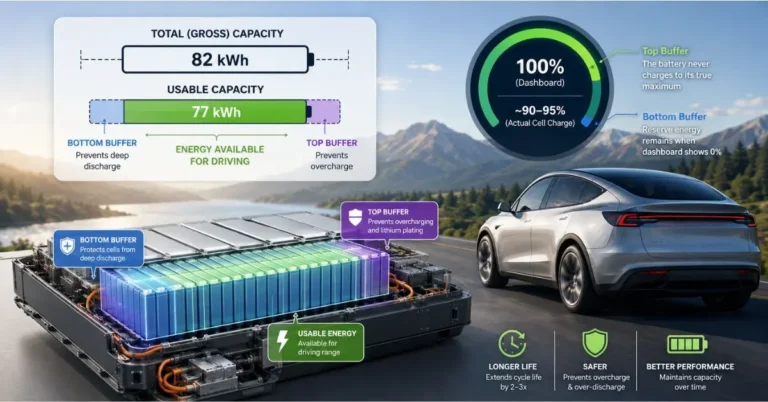
What is usable vs total battery capacity in an EV? Learn why there’s a buffer, how much you actually get, and how it affects real-world range calculations.
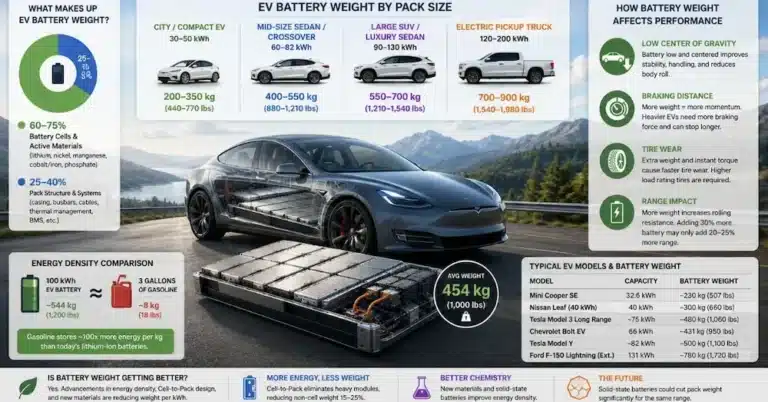
How much does an EV battery weigh? Learn battery weights by model, what drives EV pack mass, and how battery weight affects range, handling, and tire wear.
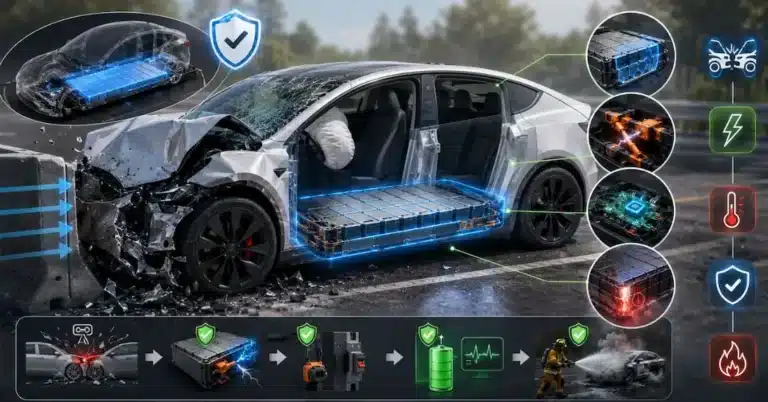
What happens to an EV battery in a crash? Learn how EV battery packs protect themselves, what automatic safety systems activate, and how crash safety compares to gas cars.
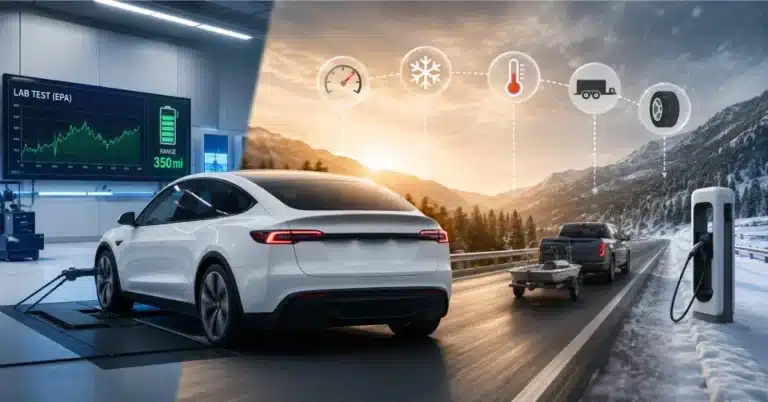
EPA range vs real-world range in EVs explained. Learn why most EVs fall 10–25% short of their EPA estimate at highway speeds and how to accurately plan for real-world range.
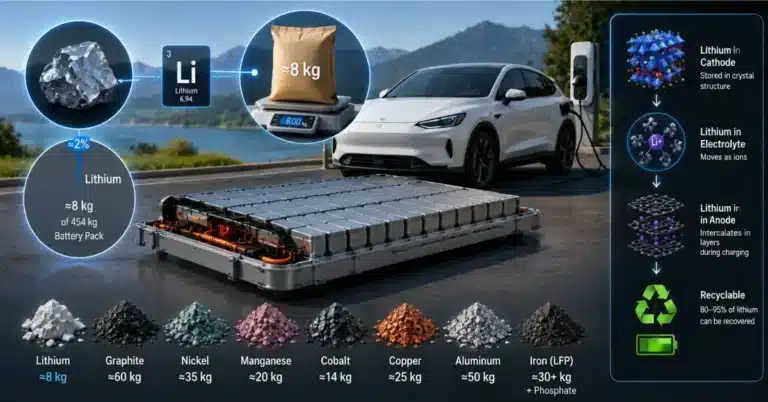
How much lithium is in an EV battery? A typical mid-size EV pack contains about 8 kg of lithium — less than 2% of total pack weight. Here’s where it comes from and how it’s used.
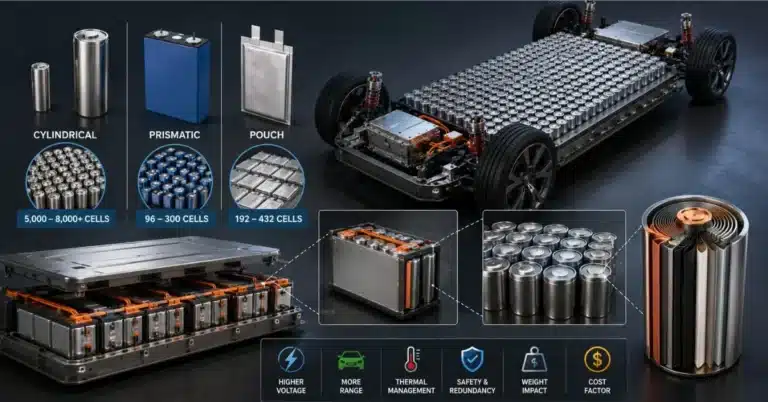
Wondering how many cells are in an EV battery pack? Learn exact cell counts by model, cell types, and how pack structure affects range and performance.
End of content
End of content