
Nissan Leaf Battery Degradation: Worst Models to Avoid

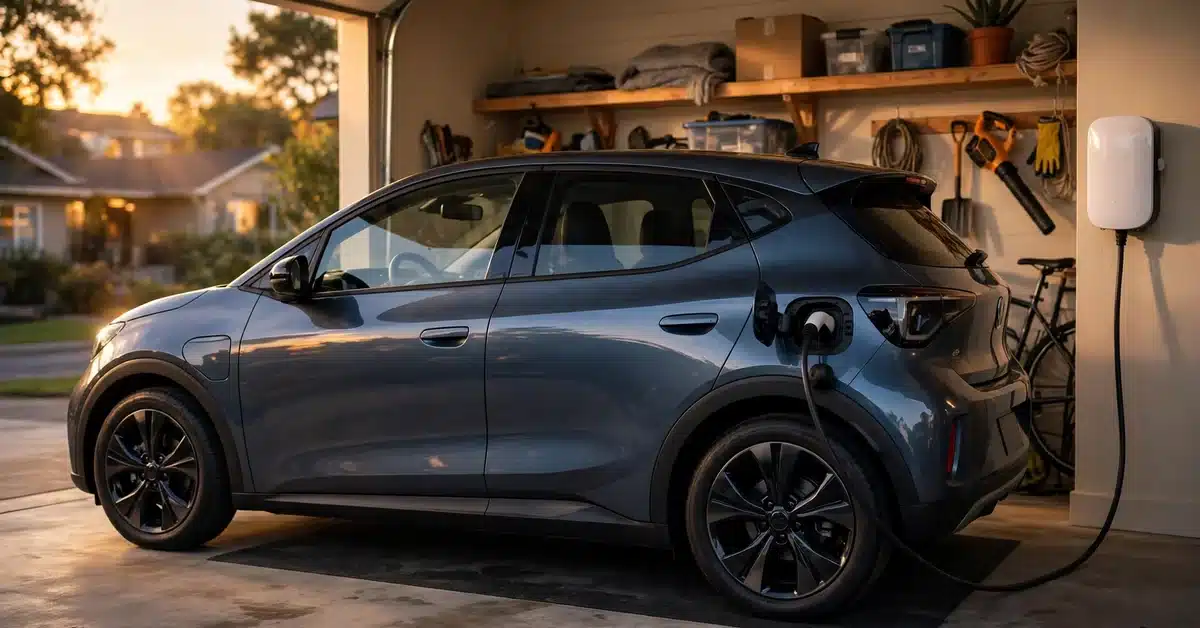
The Nissan Leaf has more real-world, long-term battery degradation data than almost any other EV, simply because it’s been on the road the longest of any mass-market electric car. That data tells a clear story: early Leaf generations degrade significantly faster than the rest of the EV market, for one specific engineering reason — and later generations improved meaningfully, though not completely.
Why the Nissan Leaf Degrades Faster Than Most EVs
The root cause is straightforward: the Nissan Leaf uses passive air cooling for its battery pack rather than the active liquid cooling used by nearly every other mainstream EV, including Tesla, Hyundai/Kia, Ford, and Chevrolet models. Without liquid cooling to actively regulate cell temperature, Leaf batteries run hotter during charging and in hot climates, and heat is the single biggest accelerant of lithium-ion battery degradation. For the general mechanics of how heat affects degradation, see EV Battery Degradation Explained.
Worst Model Years to Watch For
| Model Years | Battery | Degradation Risk | Notes |
|---|---|---|---|
| 2011–2012 | 24 kWh, air-cooled | Highest | Earliest cells; documented severe capacity loss in hot climates (Arizona, Texas) within 3–5 years |
| 2013–2015 | 24 kWh, revised chemistry | High | Improved cathode formulation reduced but did not eliminate hot-climate degradation |
| 2016–2017 | 30 kWh, air-cooled | Moderate-High | Larger pack somewhat offsets faster percentage-based degradation, but still air-cooled |
| 2018+ (Leaf / Leaf Plus) | 40/62 kWh, air-cooled | Moderate | Best Leaf generation for degradation resistance, but still lacks liquid cooling unlike competitors |
Across all generations, climate is the dominant variable: Leafs driven in consistently hot regions (Arizona, southern Texas, inland California) show dramatically faster degradation than identical model-year Leafs driven in mild or cold climates.
Real-World Degradation Data
Documented fleet data on early air-cooled Leaf models in hot climates shows annual degradation rates as high as 4.2% — nearly double the rate seen on liquid-cooled EVs from the same era. In extreme cases, early Arizona-driven Leafs lost 20–30% of capacity within just 3–5 years, well ahead of typical warranty thresholds. Leafs driven in temperate climates fare considerably better, with degradation rates closer to 2–2.5% annually — still higher than liquid-cooled competitors but far less severe than the hot-climate worst case.
What Changed in Later Generations
Nissan made incremental chemistry and battery management improvements across generations without ever adding active liquid cooling. The 2018+ Leaf and Leaf Plus benefit from a more heat-resistant cell chemistry and improved BMS thermal throttling that reduces charging speed in hot conditions to protect the pack — a workaround rather than a true fix for the underlying cooling limitation. As a result, later Leafs degrade noticeably slower than 2011–2015 models but still trail liquid-cooled competitors like the Chevy Bolt or Hyundai Kona Electric in hot-climate durability.
Buying a Used Nissan Leaf: What to Check
- Check the battery health bars or SOH via LeafSpy — this app is the industry-standard tool for Leaf-specific diagnostics and shows precise capacity data most dashboards don’t display
- Ask where the car spent most of its life — a Leaf from a hot climate carries meaningfully higher degradation risk than an identical model year from a mild climate
- Weight model year heavily — a 2019+ Leaf Plus is a fundamentally safer bet than a 2012–2014 model even at similar mileage
- Compare against our general used-EV guide — see buying a used EV: how to evaluate battery health for broader benchmarks
Conclusion
The Nissan Leaf’s air-cooled battery design makes it the clearest example in the entire EV market of how much thermal management affects long-term degradation. Early models (2011–2015) in hot climates carry the highest risk and should be inspected carefully before purchase, while 2018+ Leaf and Leaf Plus models degrade considerably slower thanks to chemistry improvements, even without adding liquid cooling. Climate history matters more for the Leaf than for almost any other EV on the used market.
